Trading Hub 3.0 (Part 13): Entering Trades with Single Candle Mitigation – SMC
If you do not know how to balance your winning and losing trades, then Smart Money Concepts is not for you. Single Candle Mitigation is a very effective way to add more entries in the direction of the trend where you hold the winning side.
However, you should not use Single Candle Mitigation everywhere. You need to identify a suitable stop-loss point to add such trades.
In a bullish or bearish market, if price breaks through IDM, we switch to the LTF to see what is happening.
If everything is going according to plan based on CHoCH and flip entry, we will look for a Buy or Sell.
What if we could add more trades in the same Buy or Sell trend based on the setup of a mitigated candle?
What is Single Candle Mitigation in SMC?
According to SMC Trading Hub 3.0, Single Candle Mitigation is a candle that sweeps the liquidity of the previous candle and closes below the high (when bearish) or above the low (when bullish), often used to add to trades when moving with the trend.
In essence, a mitigation candle is exactly a CHoCH on a small timeframe.
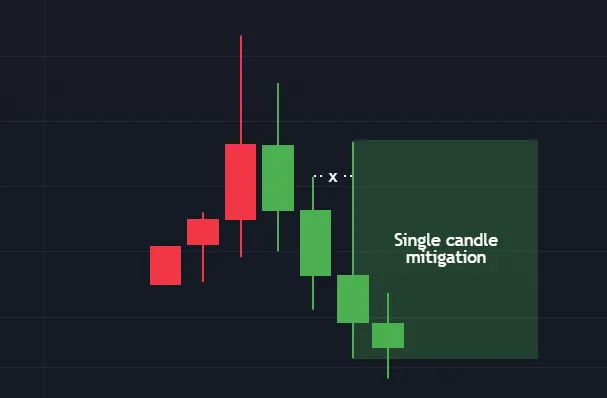 Bearish single candle mitigation
 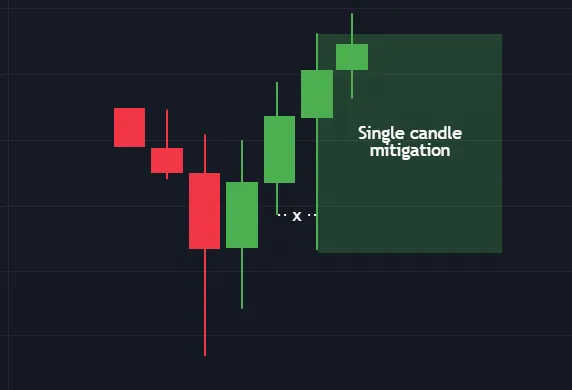 Bullish single candle mitigation
It will be more reliable if, after sweeping liquidity, that candle closes in line with the trend.
Single Candle Mitigation and sweep entry are similar to each other (see sweep entry again in Part 6 - IFC Candle)
Entering trades with Single Candle Mitigation
Sweep LQD and Single Candle Mitigation both work on sweeping liquidity in the same way. When you remove a major high or low, that is called Sweep LQD, and when you remove the high or low of the previous candle, that is called a Single Candle Mitigation entry.
How to enter a trade:
-
If price sweeps the liquidity of the previous candle, we wait for the candle to close, and when the next candle opens we enter a trade. If we switch to the LTF to enter a trade with SCOB, we will obtain a higher Risk Reward ratio compared to the HTF. However, if we enter a trade right away at the HTF, we will place SL higher, so it will be harder to hit SL.
-
According to the Trading Hub 2.0 material, we can enter a limit trade at the foot of the candle wick as in the second image below, rather than entering right when the candle closes. Or we can also mark this wick section as an OB to switch to the LTF and enter a trade when there is confirmation from a SCOB.
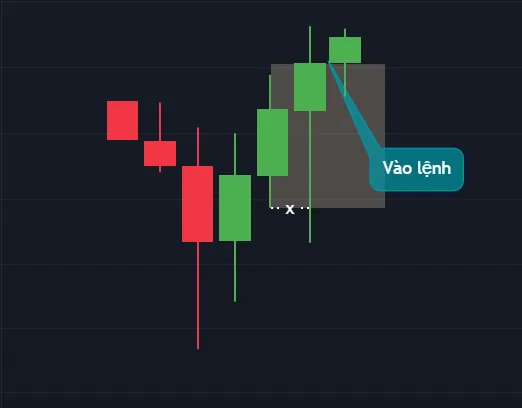 Single candle mitigation entry
 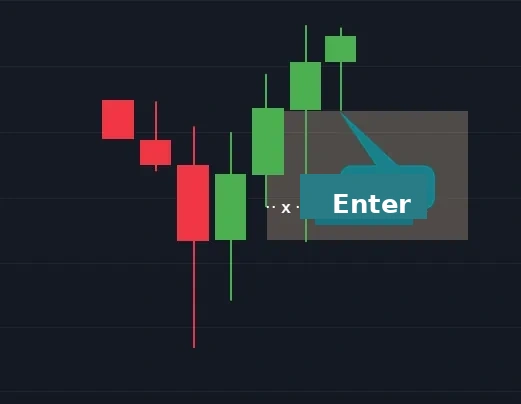 Entering a trade with the single candle mitigation wick
In essence, when setting up an entry at the LTF, we can consider Single Candle Mitigation to be exactly a Single Candle Order Block. Although these are two concepts, in essence they are the same. Many materials treat these two concepts as one and call them collectively Single Candle OB Mitigation, but Trading Hub 3.0 wants to separate them into smaller parts to analyse the specific entry process in more detail.
How to add to trades for Scalping
Combining the entry method from Part 10 - SCOB, we have entries as in the image below:
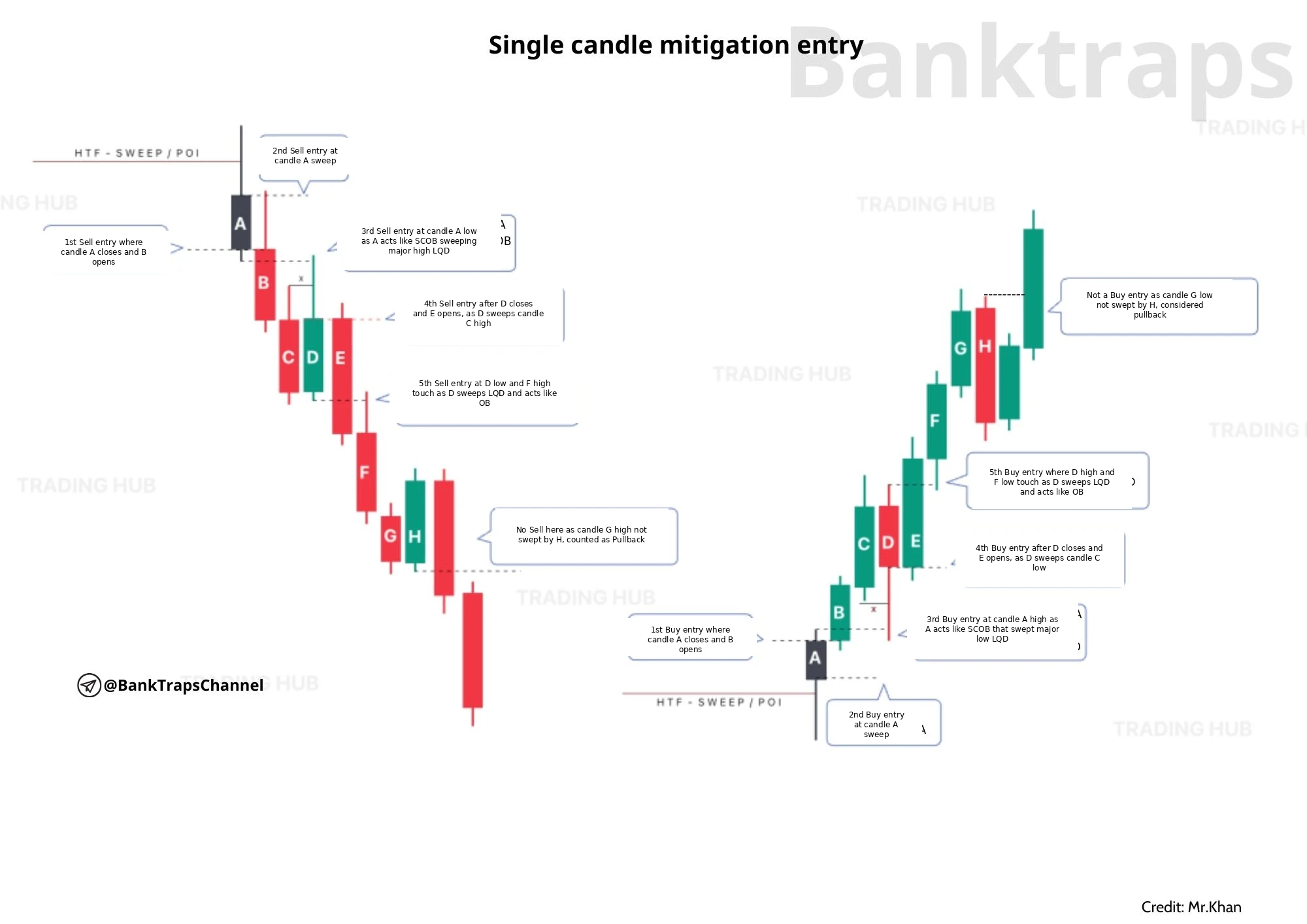 Ways to enter trades with Single candle mitigation
We can add to trades in line with the trend, but we need to identify a suitable stop-loss point to add such entries.
Only add to trades until price breaks through a major low, then move SL down to the Break even point and stop adding to trades. Switch to the HTF to find a POI for the new structure and continue adding to trades at the LTF in the same way as above.
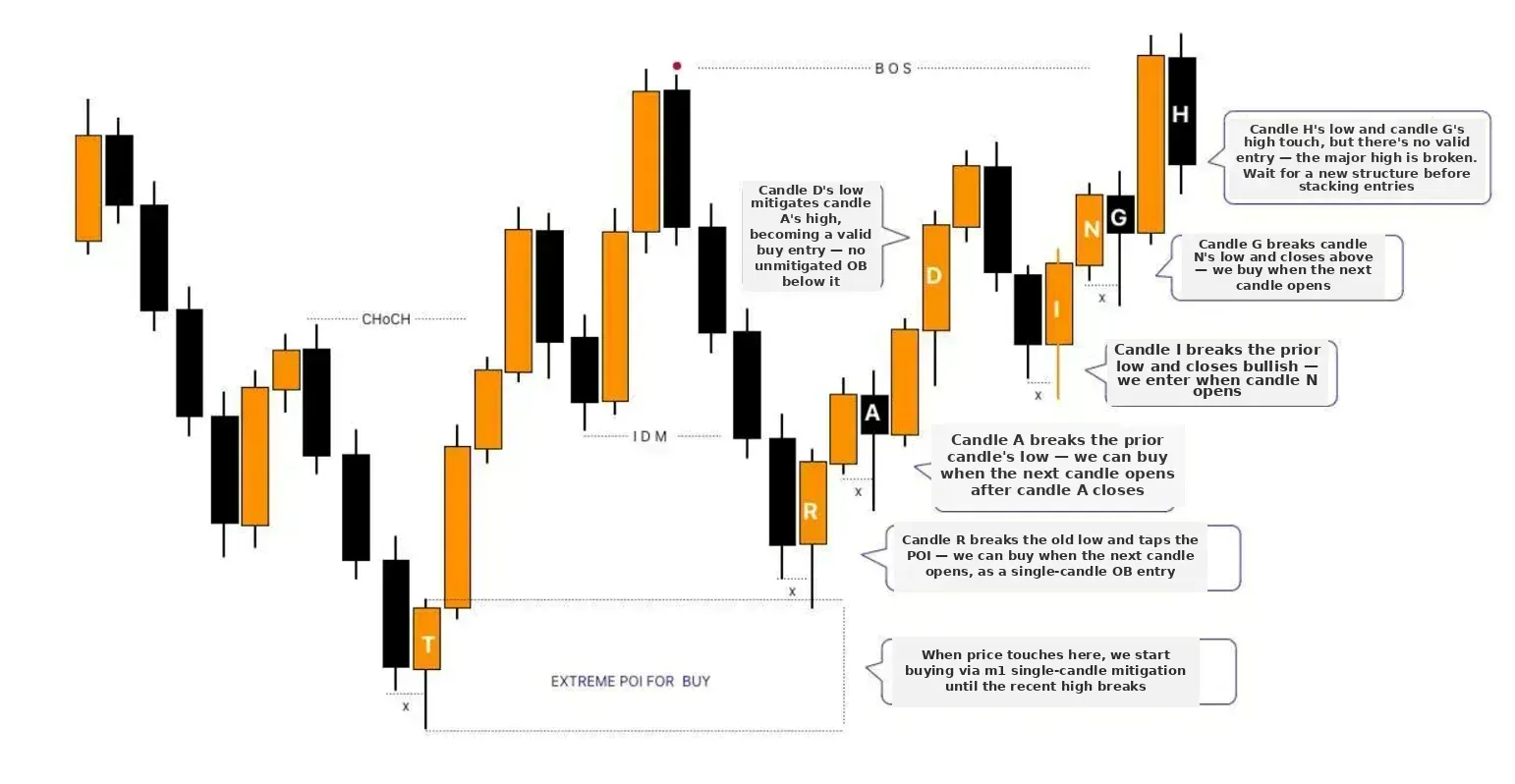 Adding to trades when Bullish
 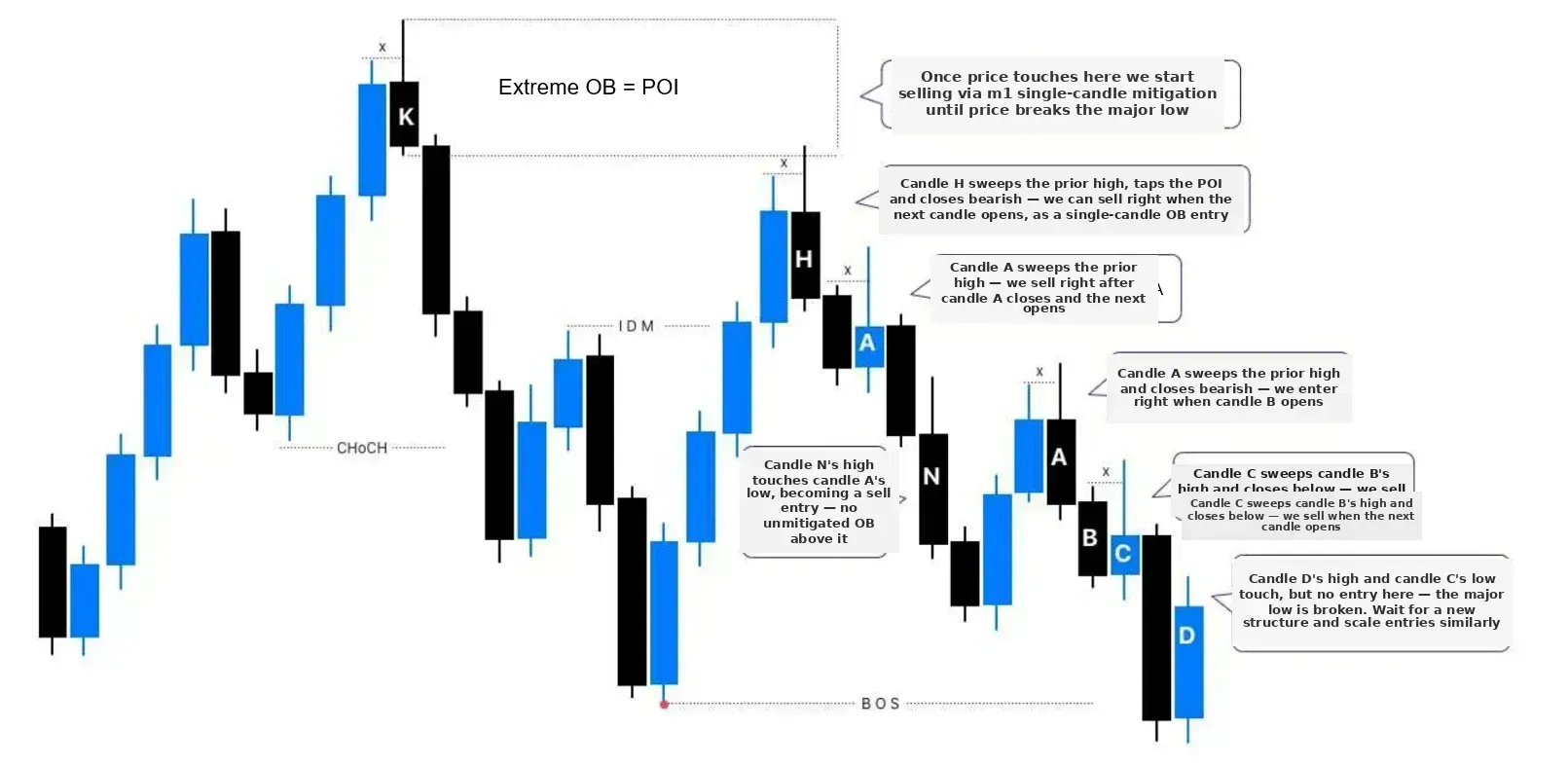 Adding to trades when Bearish
Example of adding to trades:
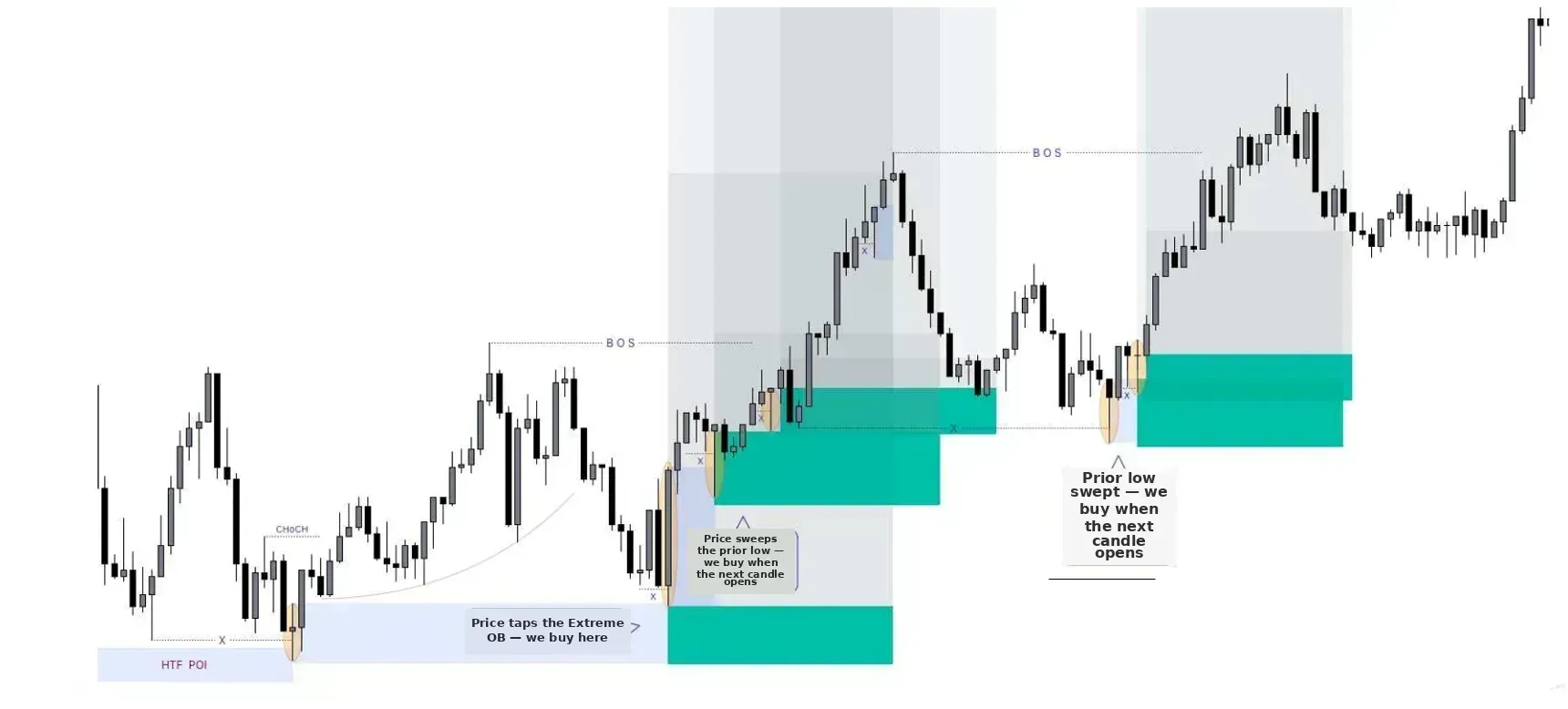 Scaling into trades using Single Candle OB Mitigation
When adding to trades, not every trade will hit TP. What is important is capital management and moving SL appropriately.
Trading Hub 3.0 encourages you to move SL to the breakeven point as soon as price touches HH / LL on the small timeframe, while also taking partial profit here. When price touches a major high / major low on the large timeframe, we take profit on the remaining part.
Please read the article many times to clearly understand its essence. The video will soon be released to readers together with specific, easy-to-understand examples.
5/5 - (2 votes)
Read structure 10x faster with JUKA
JUKA maps SMC structure — swings, BOS, CHoCH and inducement zones — automatically on any TradingView chart. No more hand-drawing structure for hours.
Get JUKA — $150