Trading Hub 3.0 (Part 3): What is Imbalance – SMC?
What is Imbalance (IMB) in SMC?
Price often drops sharply or rises abnormally high, creating an imbalance, after which the market tries to recover to correct the imbalance. Imbalance has many different names such as Fair Value Gap (FVG) / Imbalance (IMB) / Inefficient Price Action (IPA). Usually we use IMB in the process of marking POI & Order Blocks.
How to identify an imbalance zone and how to enter trades with FVG
We identify IMB by the gap between the high of the first candle and the low of the third candle when bullish; between the low of the first candle and the high of the third candle when bearish.
If this gap is small we call it a minor IMB.
If the first and third candles touch each other, we do not call that an IMB.
IMB can only be used once; if price returns to touch the IMB and reverses, that IMB has been tapped (or has been balanced) and is no longer an IMB.
Cases for identifying Imbalance
Most of the time correcting an imbalance is not necessary; there are many different factors affecting the correction of an imbalance. Imbalance is mainly used to find POI and OB.
Click on each image to enlarge and see details.
When the market is bullish
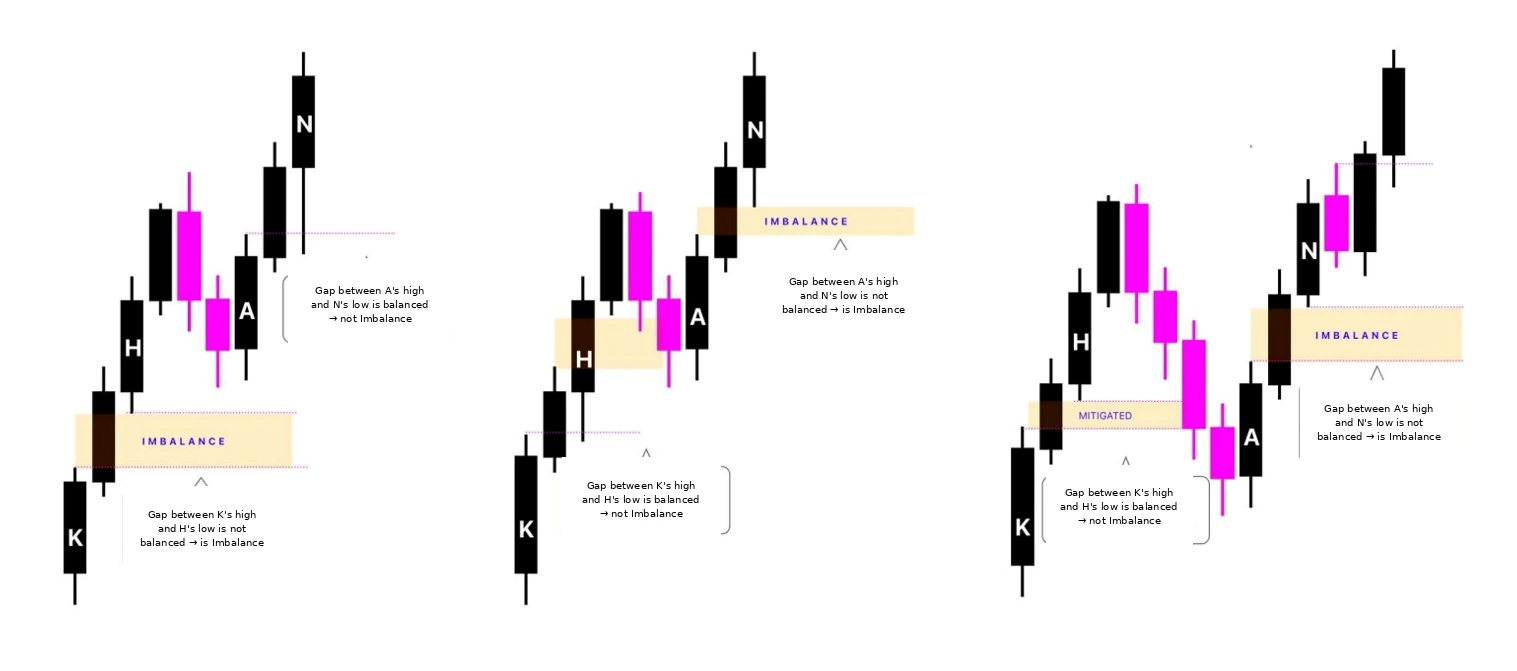 IMB when the market is bullish
When the market is bearish
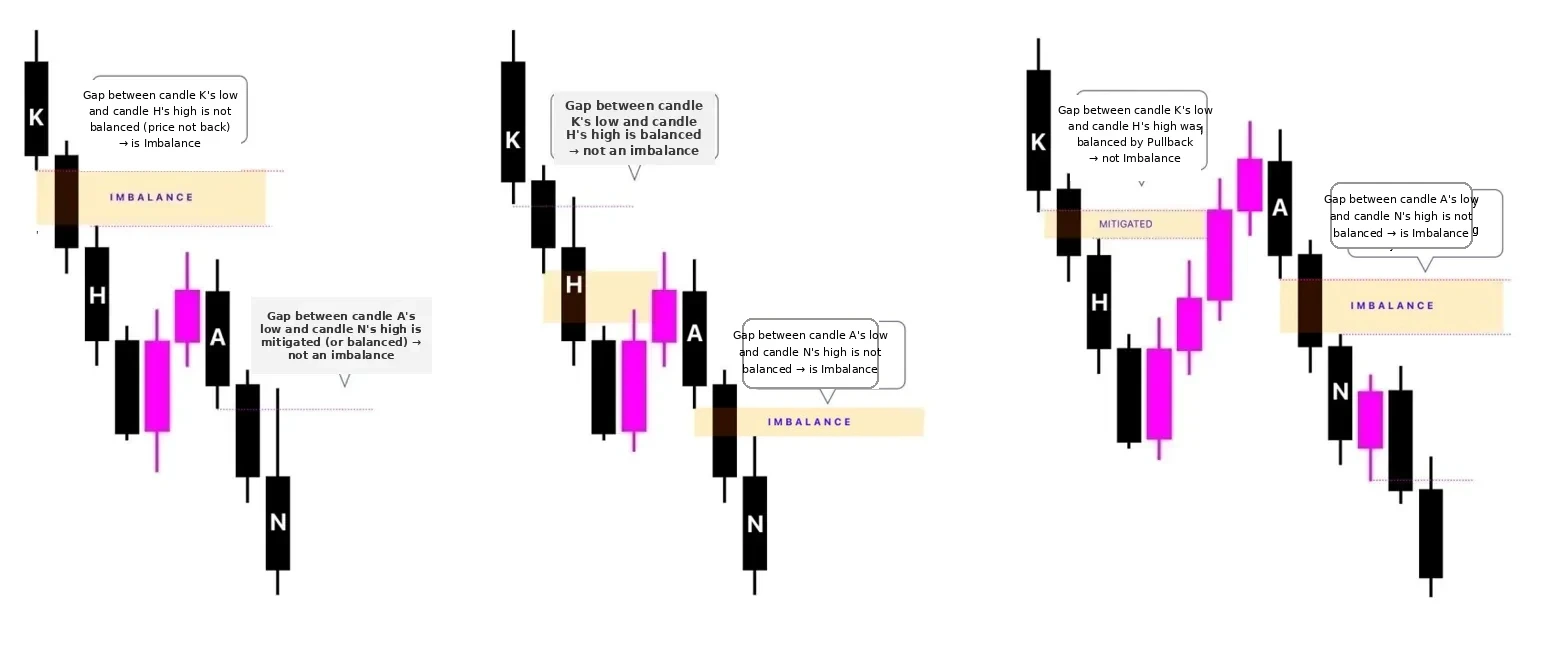 IMB when the market is bearish
Entering trades with IMB
As mentioned, IMB is only used once. In an impulse move, if many IMBs appear, price will tend to return to gradually fill those IMBs in order.
The IMB closest to the extreme is called the Extreme IMB, which is where price is most likely to reverse after touching it.
Thus we can have an entry at the Extreme IMB after breaking through IDM and place the SL at the end of the first candle. Let us look at the examples below:
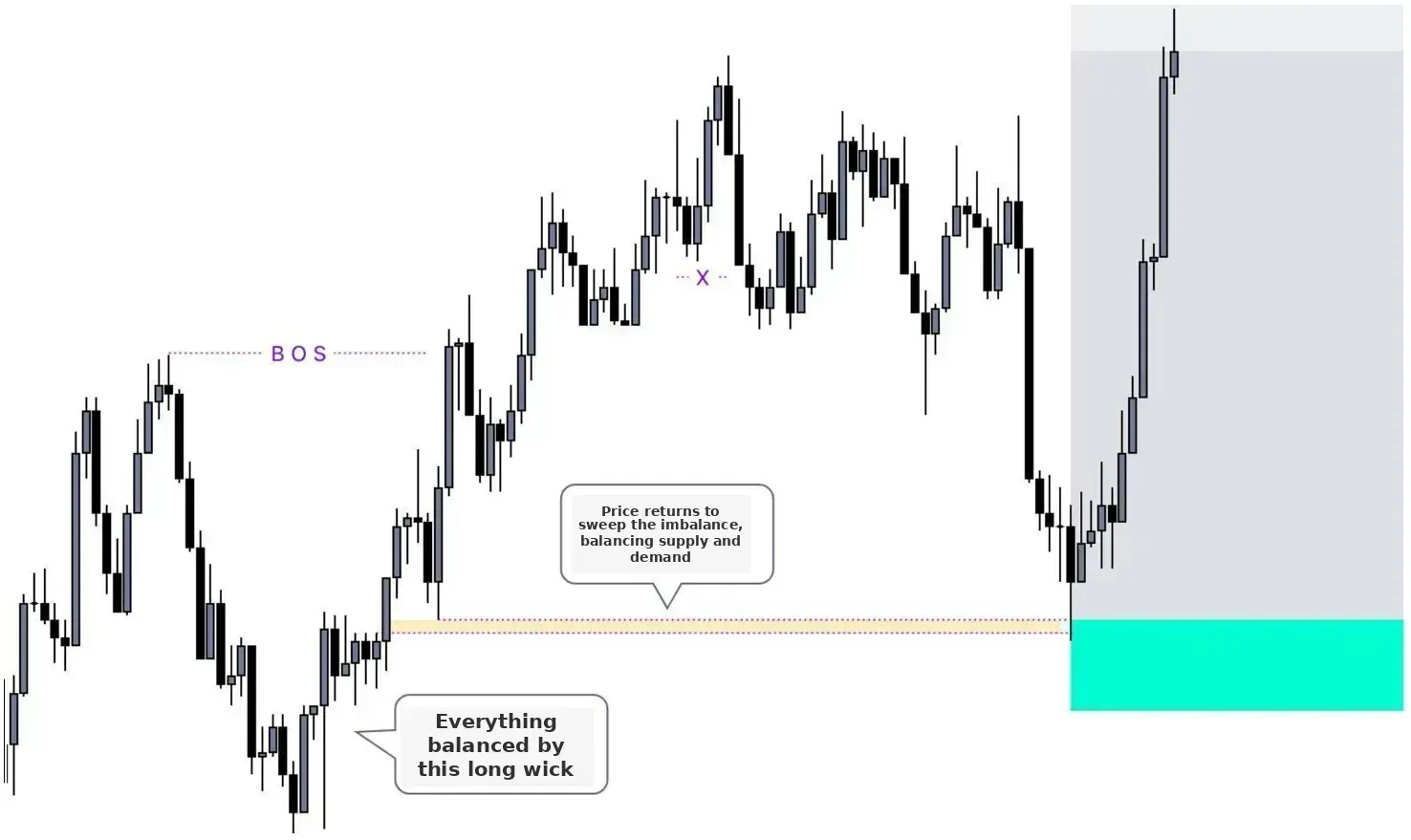 Example of entering a trade with IMB when the market is bullish
 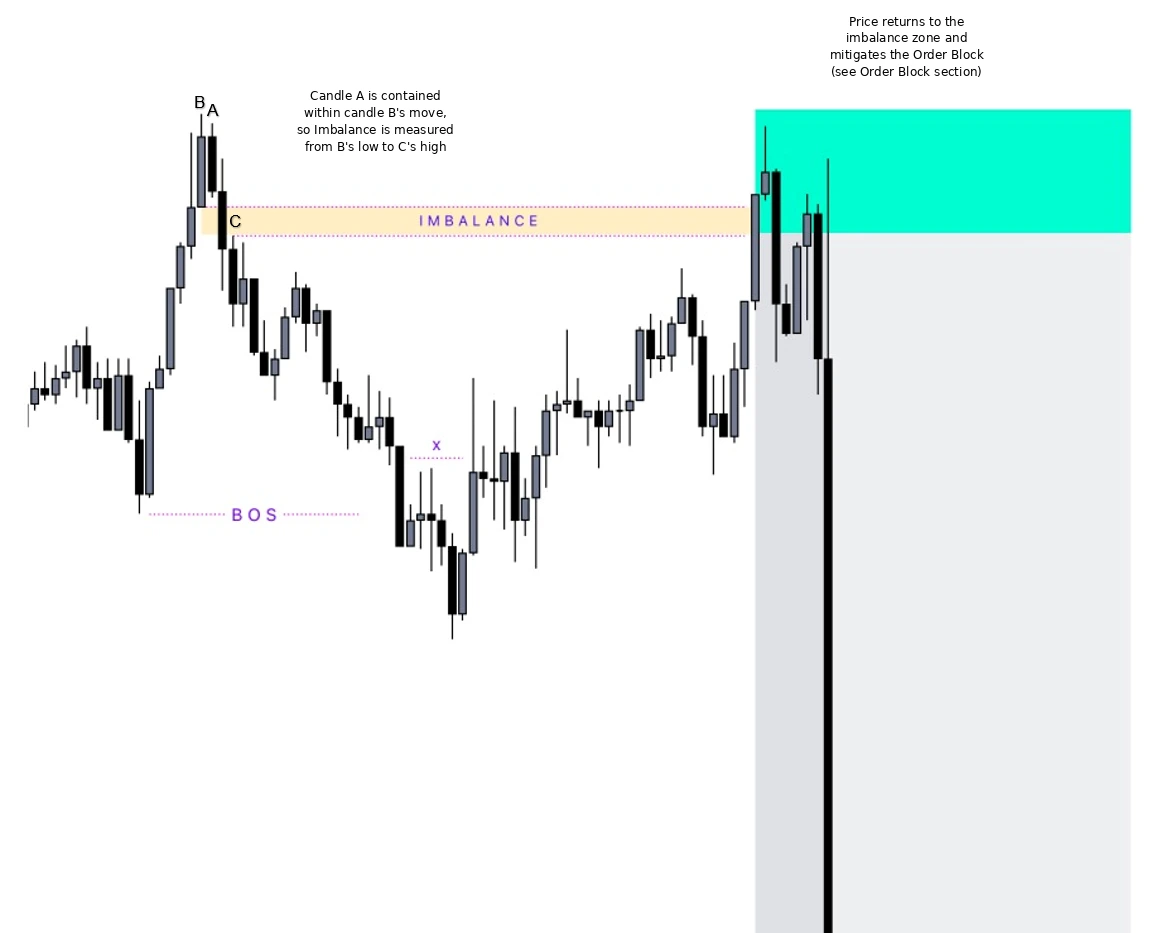 Example of entering a trade with IMB when bearish
However, to strengthen our win rate, we need to consider additional factors such as OB and POI, which will be mentioned in the following parts of this Trading Hub 3.0 material.
If we only rely on IMB to enter trades it will be quite risky, because there can be many IMBs in one impulse move, and SMT (trap) can appear to deceive us.
Turn on your chart and practise identifying Imbalances fluently yourself; this will help you identify OB more easily in the next parts.
5/5 - (1 vote)
Read structure 10x faster with JUKA
JUKA maps SMC structure — swings, BOS, CHoCH and inducement zones — automatically on any TradingView chart. No more hand-drawing structure for hours.
Get JUKA — $150