Trading Psychology: Trading Like a Professional Trader
The difference between an amateur trader and a professional trader does not lie in the trading method. Nor is it in the difference in the size of the account that traders manage. It lies in the mindset and the way of thinking about trading, or what can be called trading psychology.
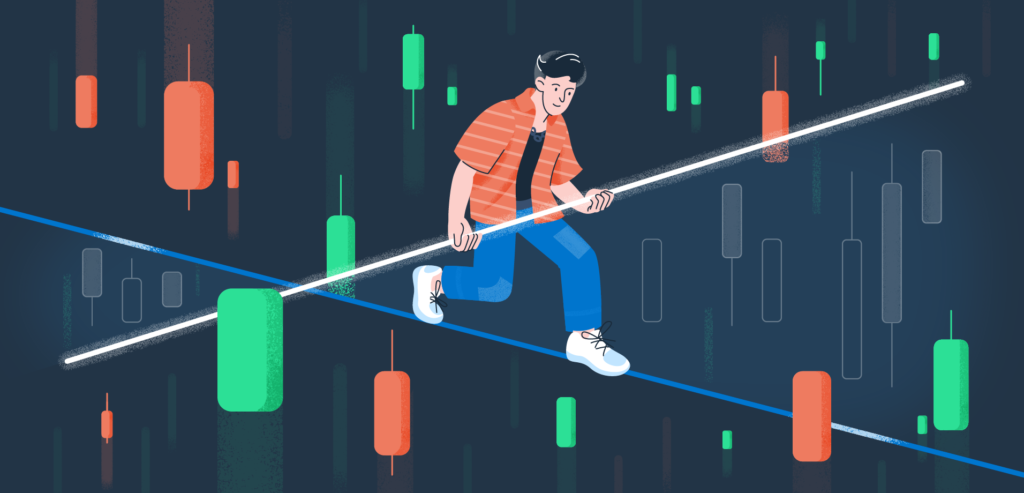
That is the truth. I think this is a very important point if you want to trade like a professional trader. At the very least you must think like a professional trader.
Professional traders are people who understand probability
Probability in trading does not carry the meaning of what you were taught in school. You do not need to calculate blue balls or red balls taken out of a box. Probability in trading means that you thoroughly understand the win rate of your trading method. At the same time you also believe that there is a random distribution between winning and losing trades.
 Trading probability is not like picking blue balls and red balls.
A random distribution between winning and losing trades means that you do not know whether the current trade is a winner or a loser. But you know that, after a series of trades, the odds tip in your favour. It can be 20 or 40 trades or more, depending on your trading method.
With that mindset, when professional traders step into a trade, psychologically they do not expect that trade to win. They simply think that it is one trade in the series of trades that they need to execute. Because they have no expectation that it must win, they do not let emotions overwhelm them and affect their trading decisions.
Professional traders are people who thoroughly understand risk and trading psychology
In trading, losing trades cannot be avoided. You may have to go through a series of losing trades no matter what trading system you use. This is no exception for anyone.
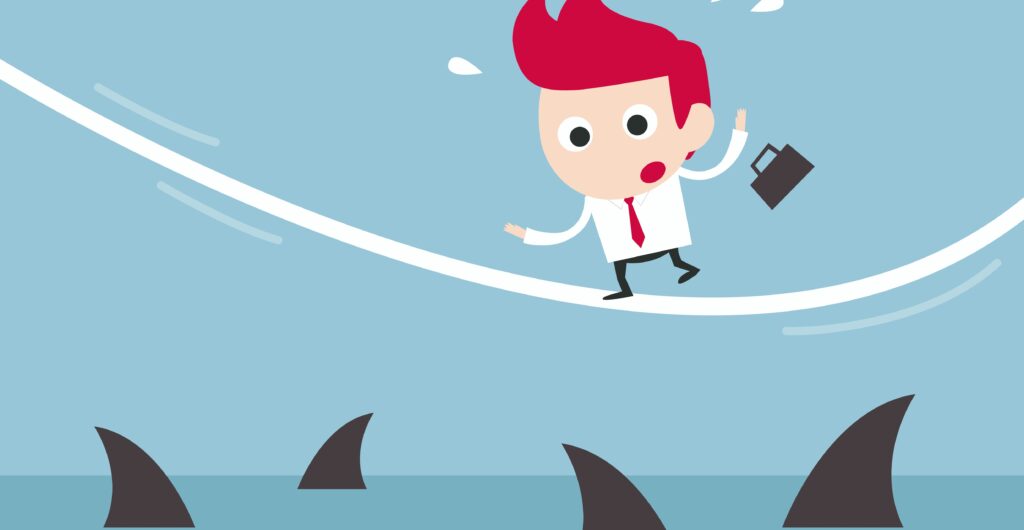 Risk management — the pinnacle psychology of a trader
But professional traders get through those account drawdown cycles. And psychologically they accept it as part of the game. They are patient with their trading method and still do what they need to do. New traders entering the market, meanwhile, after a series of trades will look for another method. And they jump from one method to another without knowing that every method has a drawdown cycle.
The difference between a new trader and a professional trader
When they first start trading, traders focus too much on making money from the market. At that point, they overlook or ignore most risk warnings. What they really care about is profit, and multiplying their account many times over.
But for professional traders it is different: they focus on managing risk. Because, simply, professional traders understand that they are not always right. Trades do not always win, and losses are unavoidable.
 Do not forget that losses and profits are two opposite sides.
Risk management does not only include placing a stop loss. It is also how much risk you accept for one trade. At the same time, that amount of risk must match your beliefs. Why so! Because if the amount lost exceeds your tolerance, at that point it will cause a great loss in your mind. This is a deep issue of trading psychology; it is very hard to identify clearly.
Professional traders accept one or a few losses as an obvious part of trading. Then, in their mind, expectations that this trade must win will not appear. Because they do not expect it to win, if it loses it will not make them angry. When they are not angry, they also have no motivation to take revenge on the market by entering many more trades.
To become a profitable trader, focus on trading psychology
To become a profitable trader, it may take you many years of trading to realise the things above. But knowing does not mean you can apply it to yourself. Because even when you know, somewhere deep in your mind you do not believe and do not want to believe. Then a conflict will occur and make you act according to your old habits again. That is why trading is simple but not easy.
5/5 - (3 votes)
Read structure 10x faster with JUKA
JUKA maps SMC structure — swings, BOS, CHoCH and inducement zones — automatically on any TradingView chart. No more hand-drawing structure for hours.
Get JUKA — $150