Trading Psychology — The Factor That Determines Success in Trading and Investing
Personally, I have also been trading for a relatively long time, and I have spent a lot of time researching trading methods.
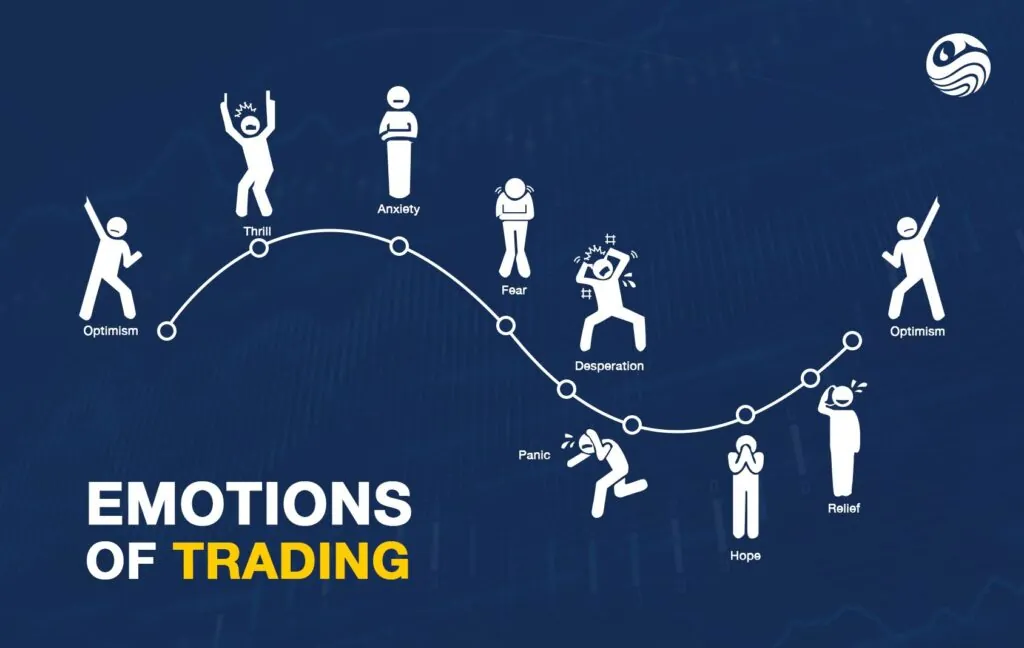 The emotional cycle of traders
But over the last 2 years, I have researched the psychology issue more deeply. This issue is usually overlooked by new traders. In my personal view, a trading method is like the tip of the iceberg, while trading psychology is like the submerged part of the iceberg below. It is very hard to identify, very hard to control and to define clearly. That is why most of us do not pay much attention to it.
How does trading psychology affect trading results
It is hard to determine an exact figure for this issue. But from my experience and research, most successful traders prioritise improving their psychology.
Not only in trading — in other fields this is even more true. I once read in a book about The Power of Habits. There were a few stories like this:
- Russian Olympic athletes often win in diving performances. And they dominated those disciplines for many years. And only much later did people realise that those athletes used a mental training exercise. Besides physical training, they spent hours training in their minds to achieve the best results.
- Another example is an American golfer whose name I do not remember. He was a pilot and was captured; he was imprisoned for many years. Because he had loved golf before and had nothing to do, every day he practised playing golf in prison by imagining it in his head. He practised over and over again, thousands of times, in his mind. When he was released, he registered for a golf tournament and won. Many people wondered why he played so well. But they did not know that he had practised in his mind for many years.
- A third example is the boxer Mike Tyson, who won the boxing championship many times. He had a very special way of training, which was to feel his opponents' punches in his mind. He repeated it over and over again many times, and when he encountered such a punch in real life, he was not made afraid by it, but steadfastly stood firm and counterattacked.
In trading it is the same: if we train our mind to go through the harsh conditions of the market, when we enter real trading our psychology can control our spirit and emotions. And we make more correct decisions rather than acting on emotions to take revenge on the market. Many correct decisions will bring better results. Trading is simple like that, but it is not easy at all.
Why do very few people focus on trading psychology
It may be because there is too much content shared about methods and about profits. And there is not much content related to this trading psychology topic.
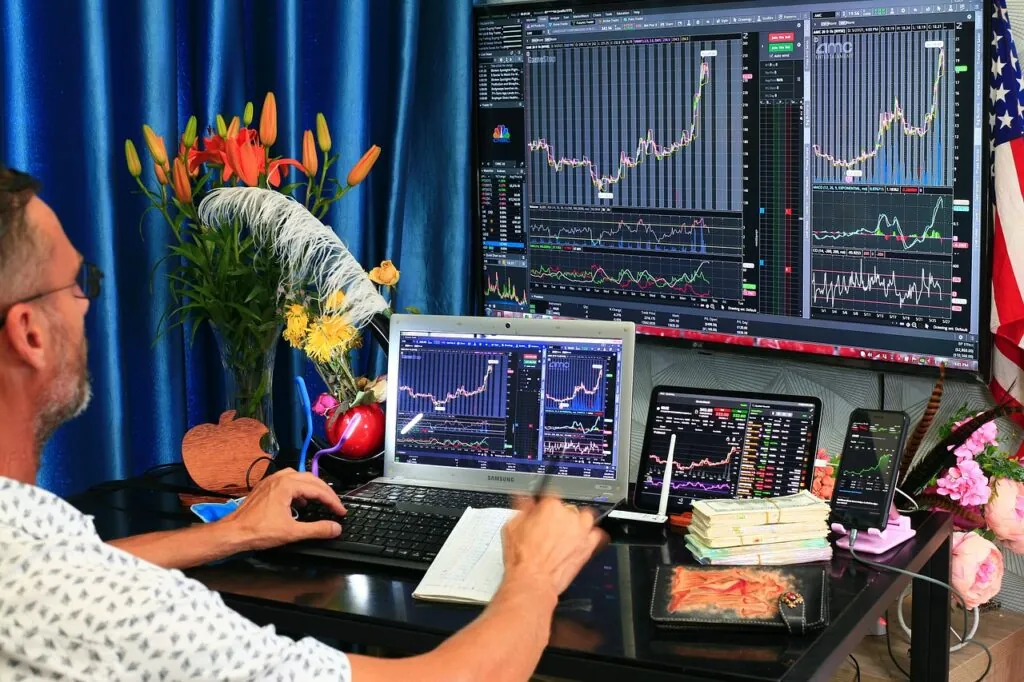 Indicators tangled all over the chart are still easier to understand than the psychology hidden deep in trading
Why is that! Perhaps many successful traders also cannot generalise the concepts about psychological issues. Perhaps they had teachers who showed them the right mindset right from the beginning. Or they went through many failures and distilled the lessons learned. But expressing and sharing them with others is very difficult.
Now let us go deeper into some aspects of trading psychology. If you go through a continuous winning streak and then you fall into a losing streak with no stopping point, look back at your trading history. I am sure of one thing: when you were winning continuously you did nothing wrong. But when you were losing continuously, whatever you did was wrong. The crux of trading is decision-making. But forming that decision comes down to beliefs, and the way we think about trading. That lies deep in the mind, where we find it very hard to recognise, and if we do recognise it we also find it very hard to change. That is why successful traders differ from losing traders mostly in their thinking.
Some examples of how important trading psychology is
Through my own personal experience:
- Example: I had only taken up running a few months ago. Each time I ran about 1.5 km and my body started to get tired and wanted to stop. I trained for 2 months and it was still the same, with no further progress. Then on a business trip, an older brother invited me to go running to see the scenery; my feet were in hotel slippers and I thought, well, running 1-2 km would be OK. Then while running and talking, looking at my watch I had already run more than 3 km, and at that point I wanted to stop. However, that older brother kept going and I tried to keep up. And then I ran a total of 6.5 km in those wide, loose hotel slippers. This experience was a leap in my belief. I had run that distance in slippers, so why normally could I not run it? That is exactly what helps me now to be able to run 5-6 km in each training session.
 Running helped me change my beliefs strongly
- An example related to trading: In the past when I traded I did not often keep a journal, but 3 years ago I started keeping a journal. And I looked back at the profitable periods: my losing trades were usually around 60%, meaning 40% of my trades were winners. At this point, in my mind there was a leap: I believed that winning trades do not need to be many. And most of my decisions are wrong. But if I follow my principles, there will be profit. You should read this part slowly and carefully, although I knew that before. But it was from reading books or from the experiences of professional traders. But when I experienced it myself, with evidence of it, it turned those concepts into a strong belief inside me.
Through this example, I notice that between your reading, your listening and watching information — but that information is not from your own experience — it leads to your knowing and understanding it, but finding it very hard to apply, especially when you have a trade or have just gone through a few losing trades. That is exactly trading psychology.
Conclusion
My personal advice: record your trading results. From those results and your own experience, turn other people's knowledge into a part of yourself. Trading is a journey; I will share content about psychology in this topic. If you have similar experiences, please share them so we can develop together. On the topic of trading psychology, you can refer to more content here. If you have not found a suitable method, please refer to SMC.
5/5 - (2 votes)
Read structure 10x faster with JUKA
JUKA maps SMC structure — swings, BOS, CHoCH and inducement zones — automatically on any TradingView chart. No more hand-drawing structure for hours.
Get JUKA — $150