Lesson 8: Elliott Flat Waves (3-3-5): Regular, Expanded, Running Flat
The Elliott flat wave is a common A-B-C sideways corrective pattern in Elliott Wave Theory. A flat does not appear randomly. It almost always accompanies a still very strong larger trend, and that is the message throughout this article: when you see a clear flat, the market is telling you that the main force has not weakened at all.
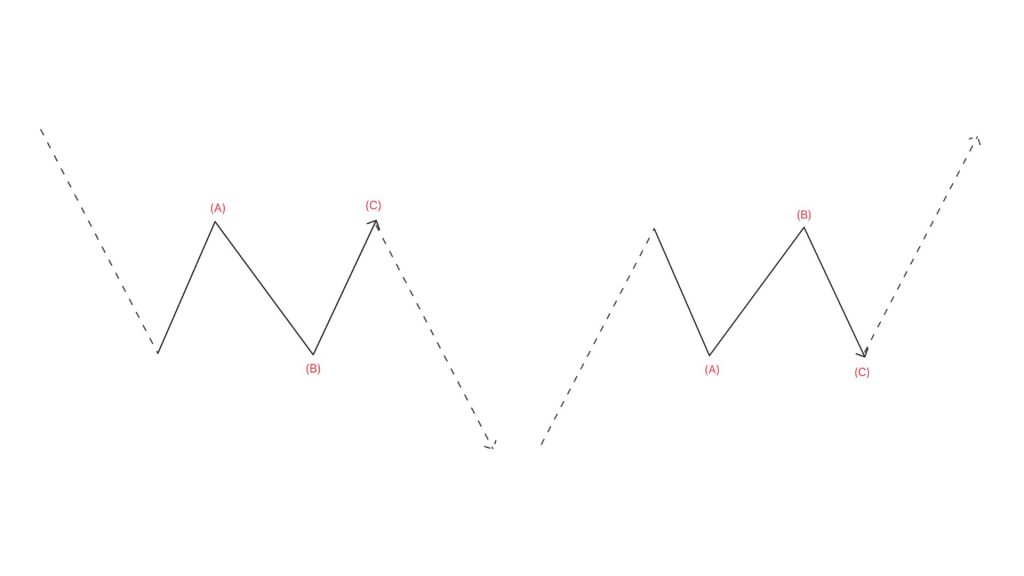 Figure 2: Flat wave pattern in a downtrend and an uptrend
What is the Flat wave pattern in Elliott?
The Elliott flat wave pattern is a sideways corrective wave, labelled A-B-C, with a 3-3-5 sub-wave structure. Wave A consists of 3 waves, wave B consists of 3 waves, wave C consists of 5 waves. This is precisely the difference compared to a zigzag, which has a 5-3-5 structure.
The 3-3-5 structure reflects market psychology, with each wave reflecting a different state of force:
- Wave A (3 waves): moves against the larger trend but lacks force, so it can only unfold 3 waves instead of expanding into a full 5 waves as in a zigzag.
- Wave B (3 waves): inherits exactly the lack of counter-trend pressure of wave A, so it retraces close to the starting point of wave A.
- Wave C (5 waves): is a motive wave, but usually only slightly exceeds the end point of wave A, instead of exceeding it significantly like the wave C of a zigzag.
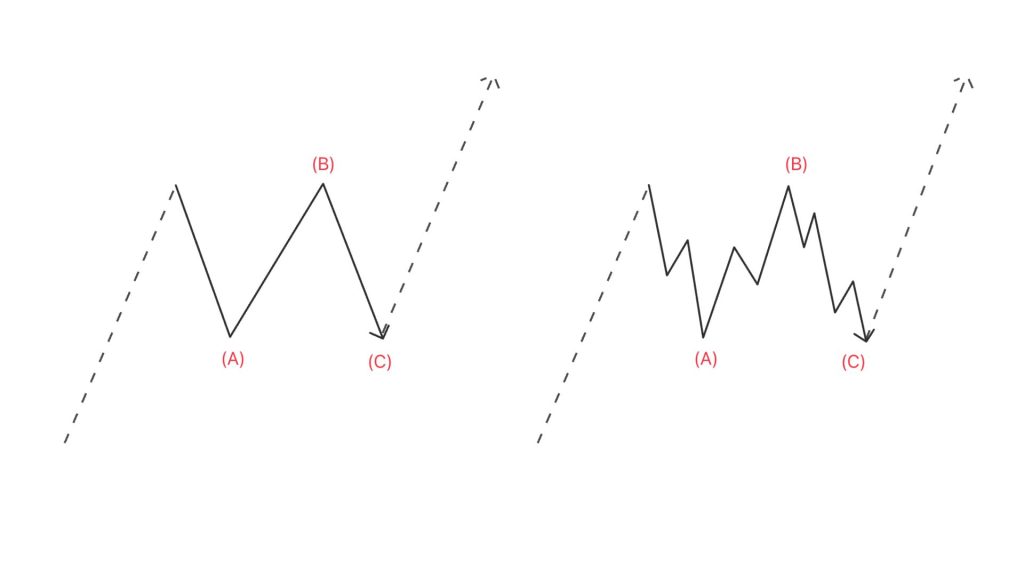 Figure 2: A standard Elliott flat wave has an A-B-C structure corresponding to 3-3-5
Precisely because wave C does not significantly exceed wave A, a flat retraces shallowly and looks sideways, and many Vietnamese documents call it a flat wave. A flat is a weak corrective wave, showing that the counter-trend side does not have enough strength to create a deep correction. That is an early sign that the main trend will soon return.
"Flat" is the generic name for every 3-3-5 A-B-C correction
In the Elliott trader community, the word "flat" is used as a generic name for any A-B-C corrective wave that subdivides into 3-3-5. You should not mechanically understand that a flat is always absolutely flat horizontally.
In practice, many flats still slope slightly with or against the larger trend. What is fixed is the 3-3-5 sub-wave structure, not the perfectly flat external shape. It is precisely this confusion between "name" and "shape" that causes many people to miss a flat when it is not horizontal.
Three types of Elliott Flat waves: Regular, Expanded and Running
Elliott distinguishes three types of flat based on their overall shape, specifically the ending position of wave B and wave C relative to wave A. The table below summarizes the core identification points before going into each type.
| Flat type | Where does wave B end | Where does wave C end | Frequency |
|---|---|---|---|
| Regular flat | Around the starting point of wave A | Just beyond the end point of wave A | Less common than expanded |
| Expanded flat | Beyond the starting point of wave A | Significantly beyond the end point of wave A | Most common |
| Running flat | Beyond the starting point of wave A | Does not reach the end point of wave A | Very rare |
Regular Flat: the textbook standard form
In a regular flat, wave B ends around the starting level of wave A, and wave C ends only slightly more than the end point of wave A (see Figure 2). This is the most balanced form, with the three waves A, B, C approximately equal in length. A regular flat gives the correct "textbook" image, but you will encounter it less than you think.
Expanded Flat: the commonly encountered variant
The Expanded flat pattern is the most common variant, and also the type that most easily deceives beginners. In an expanded flat, wave B exceeds the starting point of wave A, and wave C ends significantly beyond the end point of wave A. In other words, both B and C create a new price extreme compared to the preceding impulse wave.
Elliott called this form an "irregular" flat, but Prechter himself noted that that name is not reasonable, because an expanded flat is in fact much more common than a regular flat.
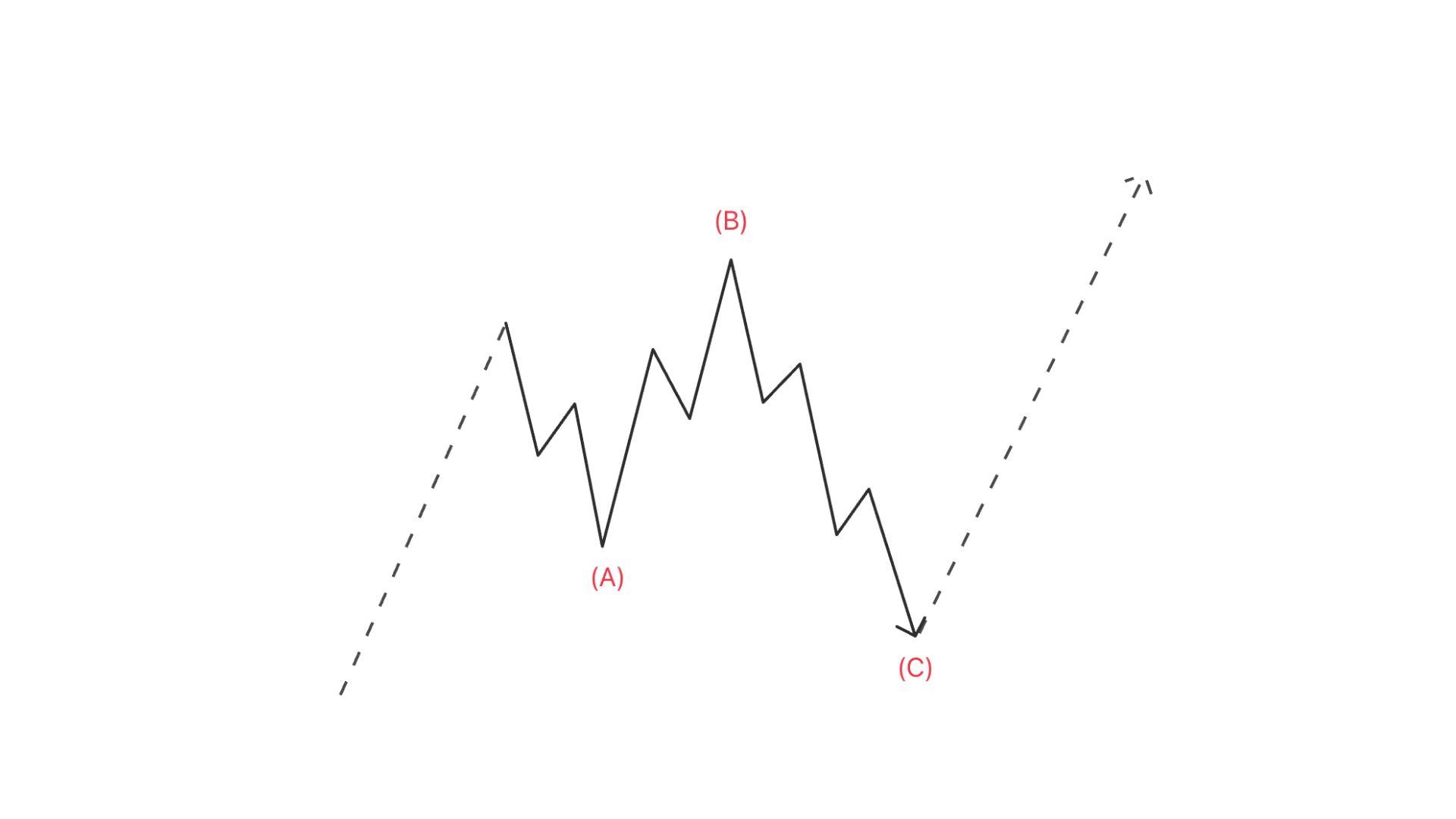 Figure 3: An Expanded flat wave has waves B and C exceeding the start and end points of wave A
In terms of ratio, Prechter and Frost's book records that wave C of an Expanded Flat is usually 1.618 times the length of wave A. This figure helps you estimate the likely ending zone of wave C instead of blindly catching bottoms or selling tops.
Running Flat: the rare variant
The Running flat wave is the rarest variant of the Elliott Flat. Here, wave B exceeds the starting point of wave A as in an expanded flat, but wave C fails, does not complete its journey and does not even reach the end point of wave A. The cause is that the force in the direction of the larger trend is too strong, causing the entire pattern to be pulled askew in that direction.
To conclude that a pattern is a running flat, you must check that the sub-waves strictly comply with Elliott rules. If what you think is wave B subdivides into 5 waves instead of 3, it is most likely wave 1 of a new impulse at a higher degree, not wave B of a flat. This confusion causes traders to enter orders completely against the true trend.
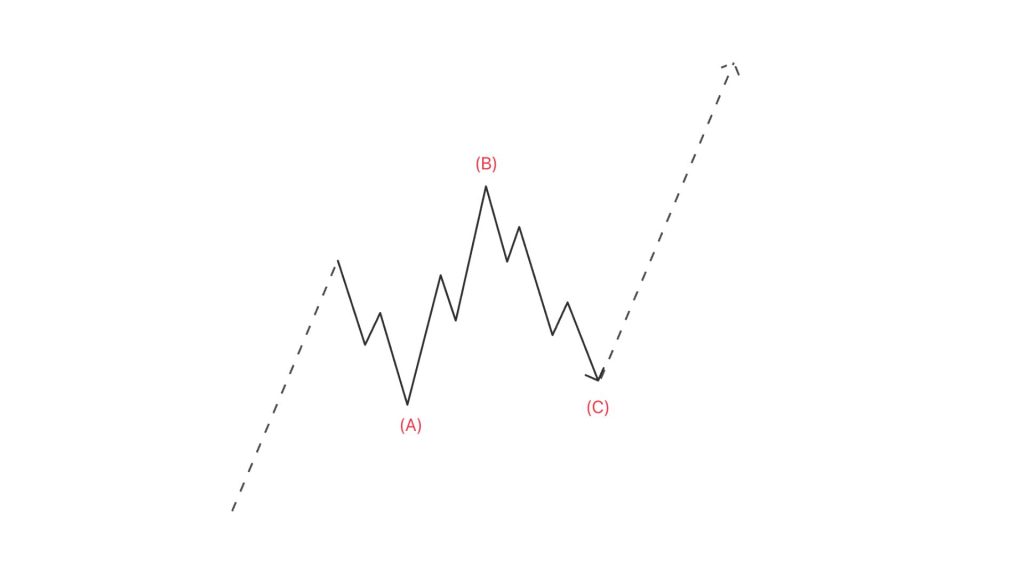 Figure 4: A Running flat wave has wave C not exceeding the extreme of wave A
In which position does a Flat wave usually appear?
A flat can appear in: wave 4 of an impulse, wave B of a zigzag, wave W of a double three (belonging to the complex corrective group).
In an impulse, a flat appears frequently in wave 4 and less commonly in wave 2. But position is not the most important thing. The most important thing, and also the point most Vietnamese articles overlook, is the relationship between a flat and an extension.
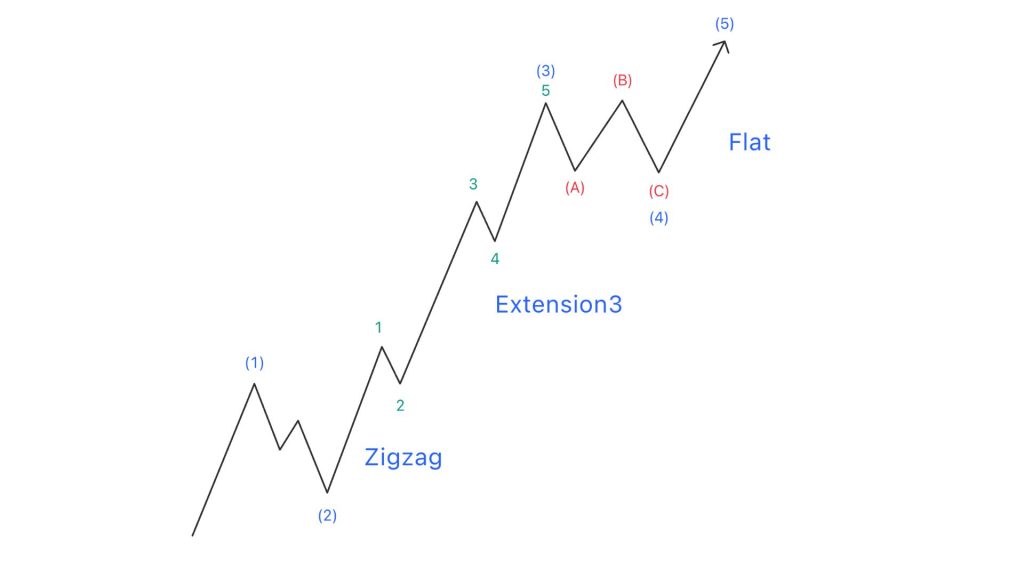 Figure 5: A flat wave usually lies in the wave 4 position and before/after an extension wave in an Impulse
A flat wave almost always precedes or follows an extension. The stronger the trend, the shorter and more compact the flat.
You can review the mechanism of an extension wave to understand why flats and extensions often go together.
The flat pattern can also appear in the role of wave B in a zigzag pattern. Wave B is a 3-wave corrective wave inside a corrective wave at a larger degree, so it can entirely be any corrective wave pattern.
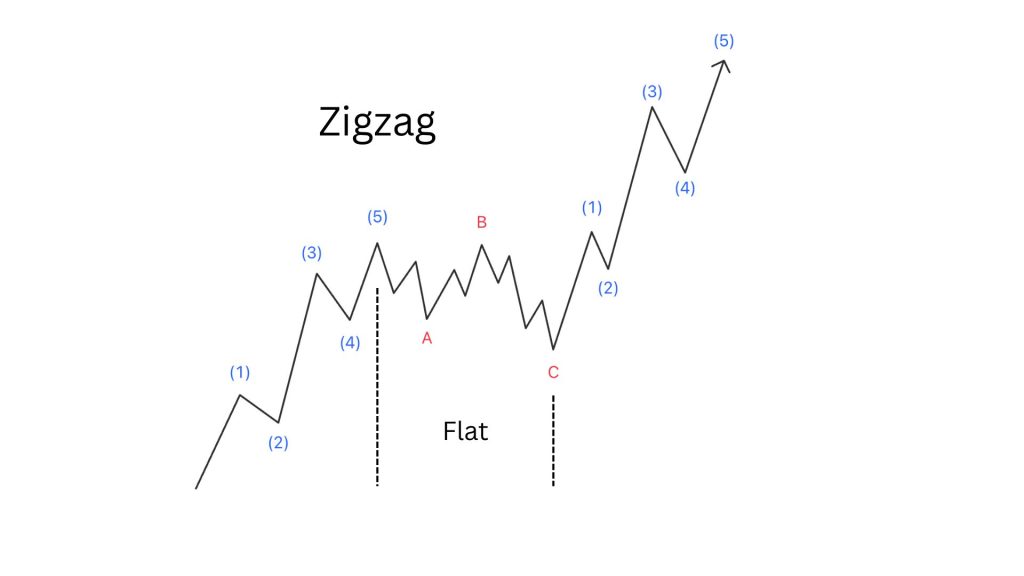 Figure 6: A flat wave is wave B of a larger zigzag wave
Distinguishing Flat and Zigzag
Zigzag and flat are two opposing corrective groups within the same corrective family. Firmly grasping the four axes of difference below helps you avoid miscounting the group, a very costly mistake when entering orders.
| Criterion | Zigzag | Flat |
|---|---|---|
| Sub-wave structure | 5-3-5 | 3-3-5 |
| Slope | Steep, strongly counter-trend (sharp) | Sideways |
| Wave B behavior | Never exceeds the starting point of wave A | Retraces a minimum of 80-90% of wave A, can exceed the starting point of A (expanded/running) |
| Retracement depth | Deep retracement | Shallower retracement |
| Preferred position | Wave 2 | Wave 4 |
This opposition is directly related to the rule of alternation: if wave 2 is a sharp correction in zigzag style, wave 4 is usually a sideways correction in flat style, and vice versa. You can read more deeply about this mechanism in the article on the rule of alternation. If you came here from the article on Elliott zigzag waves, the table section above is exactly where the question of distinguishing the two patterns is fully resolved.
Trading with Elliott Flat waves: wait for wave C confirmation
Because the final wave of a flat, i.e. wave C, is divided into 5 waves, the technique for setting up a trading signal is similar to that for an impulse wave. According to Jeffrey Kennedy, the entry process consists of three steps:
- Confirm the pattern is a flat, i.e. count a 3-3-5 structure and wave C unfolding 5 waves.
- Wait for price to exceed the top (bull market) or bottom (bear market) of sub-wave [iv] inside wave C.
- Enter in the direction of the main trend after the [iv] mark is exceeded, because that is a sign wave C has most likely ended.
Movement beyond wave [iv] confirms wave C has completed and the main trend is about to return.
The subtle point that few documents mention: this technique cannot be applied to a zigzag, even though the wave C of a zigzag also has 5 waves. The reason lies in the relative position. In a flat in a bull market, wave [iv] of wave C usually lies above the bottom of wave A. While in a zigzag in a bull market, wave [iv] of wave C can lie below the bottom of wave A, making the reference mark no longer reliable. This is why you must correctly identify the corrective group before choosing an entry technique.
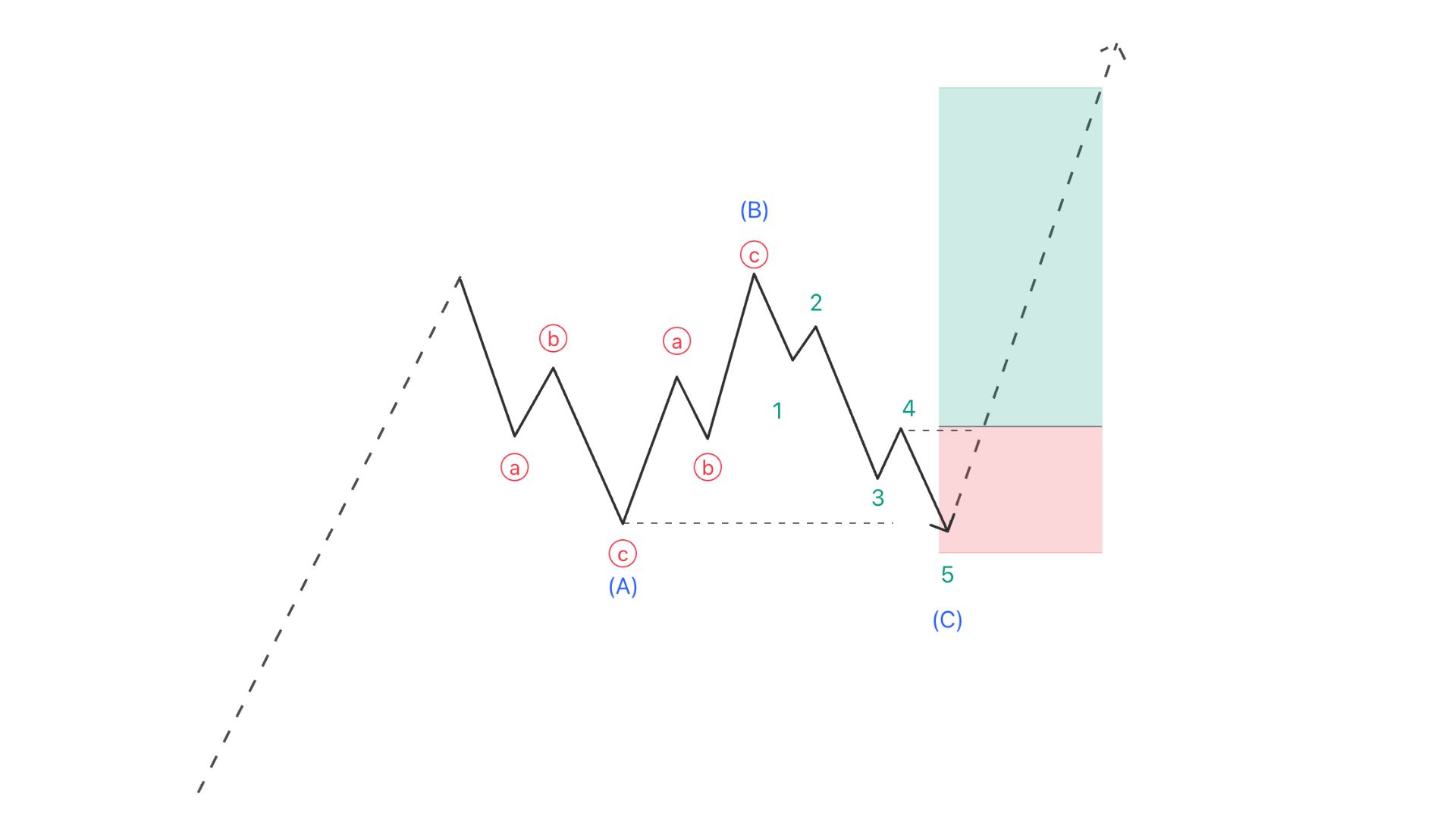 Figure 7: Entering with a flat when price exceeds wave 4 inside wave C
Frequently Asked Questions (FAQ)
Why does wave B of a flat exceed the starting point of wave A?
This phenomenon occurs in an expanded flat and a running flat, and it reflects the strength of the larger trend. When the force in the direction of the main trend is very strong, the counter-trend side only creates a weak wave A. Wave B inherits the momentum of the main trend and is pushed further, exceeding even the starting point of wave A to create a new price extreme. Therefore, a wave B that breaks the boundary is not an abnormal sign to worry about, but is usually a signal that the main trend is about to continue strongly.
Does a double flat exist?
Yes, but Elliott does not call it a "double flat". He classifies structures consisting of two consecutive flats into the double three group, i.e. combination corrective waves. In that context, each flat is considered a simple "three", and they are connected to each other by a wave X. If you often encounter what you call a "double flat" on the chart, you should read how to label W-X-Y in the article on Elliott double three to name the structure correctly.
By what percentage does a Flat retrace the preceding impulse wave?
The original book describes it in qualitative terms rather than hard figures: a flat retraces a shallower proportion compared to a zigzag of the same impulse wave. The reason is that both wave A and wave B of a flat are weak, so the entire correction does not have enough force to eat deeply into the preceding impulse wave. Subsequent articles on NEoWave will give you specific quantitative figures on Flat retracement levels.
Is a Running flat worth trading?
In most cases, the answer is that you should not bet on a running flat. This is a variant so rare that there are almost no clear examples in price data, and the probability that you are labelling it incorrectly is up to 9/10. You will very easily confuse a Running flat with a 1-2 wave sequence of an Impulse. Instead of trying to catch a running flat, the safer way is to wait for price confirmation. If what you think is wave B has 5 waves, think immediately of the possibility that it is wave 1 of a new trend, and adjust your position accordingly.
What is an Elongated Flat?
The classic Elliott Flat wave has only three types: regular, expanded and running. The figure of four types including Elongated Flat that you see on many sites comes from the NEoWave school of Glenn Neely. Elongated Flat is a form of flat with an abnormally extended wave C according to Neely's own classification (8 forms of flat). When learning the foundations, you should firmly grasp the three types according to Elliott first, then supplement with advanced classification to avoid confusion.
Rate this article
Read structure 10x faster with JUKA
JUKA maps SMC structure — swings, BOS, CHoCH and inducement zones — automatically on any TradingView chart. No more hand-drawing structure for hours.
Get JUKA — $150