ICT Part 4: What Are IRL and ERL? What Are HRLR and LRLR?
In the ICT method, liquidity is concentrated at IRL and ERL. To understand IRL and ERL, we first need to grasp the ICT Dealing Range.
Dealing Range Theory (DRT)
A Dealing Range in ICT is a trading range within a Swing high that has taken liquidity from an old high and a Swing low that has taken liquidity from an old low.
When price moves sideways within this range, institutions gather data to determine in which area liquidity is most concentrated and push price toward it to hunt stops.
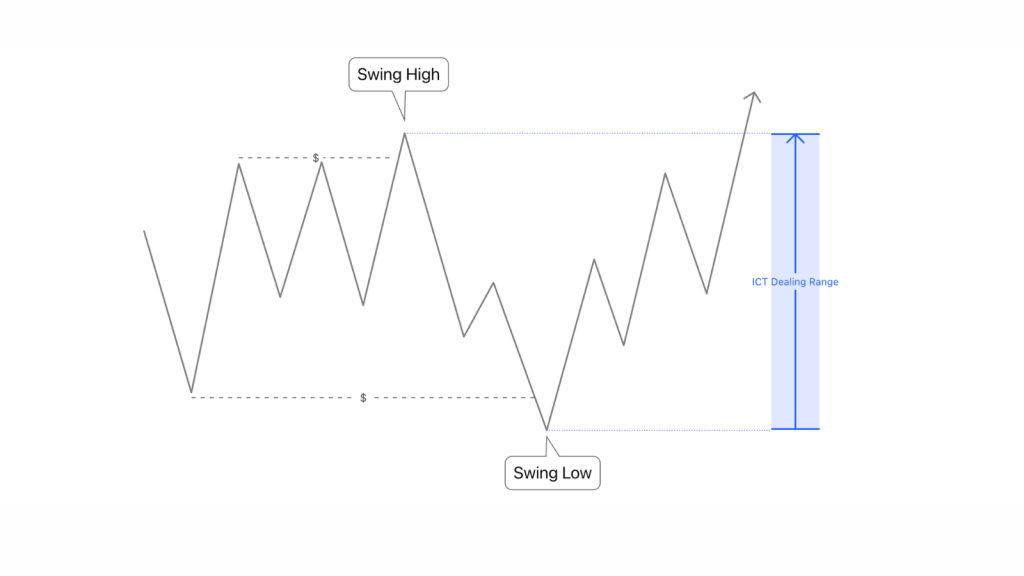 Figure 1: What is an ICT Dealing Range?
The entire price zone between the Dealing Range is an internal range, where internal liquidity zones (IRL) are formed.
The high of the Dealing Range is BSL, the low of the Dealing Range is SSL, where a lot of liquidity from both the buy and sell sides is located because these are the two areas where many stop-loss orders are concentrated.
ERL – External Liquidity
ERL (External Range Liquidity) is the liquidity at past highs or lows that form a Dealing Range.
ERL contains many stop-loss orders of retail traders, forming a “magnet” that attracts the action of Smart Money.
Common types of ERL
- Old Highs/Lows: These are price zones where the market previously created clear highs or lows such as PDH/PDL/PWH/PWL… Price tends to return to these levels because a large amount of liquidity is waiting there.
- EQH/EQL: These are equal highs or equal lows formed in the past, where stop losses exist at the same price level. Institutions will take advantage of this to trigger stops and enter trades in the opposite direction.
IRL – Internal Liquidity
IRL (Internal Range Liquidity) is the short-term highs and lows within an ICT Dealing Range.
Price always moves from IRL → ERL and vice versa.
IRL is the ideal place to look for an entry, and ERL is the ideal place to take profit.
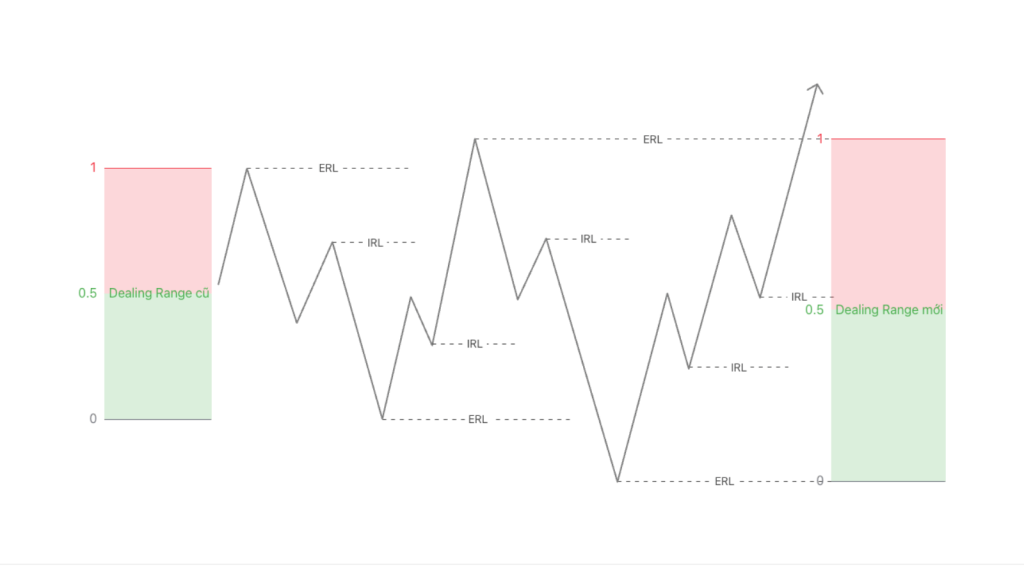 Figure 2: What are IRL and ERL?
In the ICT method, price moves for two reasons:
- To take liquidity (move toward ERL).
- To rebalance price (move toward IRL).
How to identify IRL
IRL is formed when price taps into imbalance zones such as:
- FVG, LV
- Volume Imbalance
- Gap
The characteristic of these zones is that they all leave a gap between the high and low of the first and third candles, where price does not intersect.
If we bring it down to a lower timeframe, we will see that these candle highs and lows are exactly the highs and lows that formed a swing, containing liquidity from both the buy side and the sell side.
When price returns to test these zones, in essence it is sweeping liquidity on a lower timeframe.
The example below illustrates this very clearly.
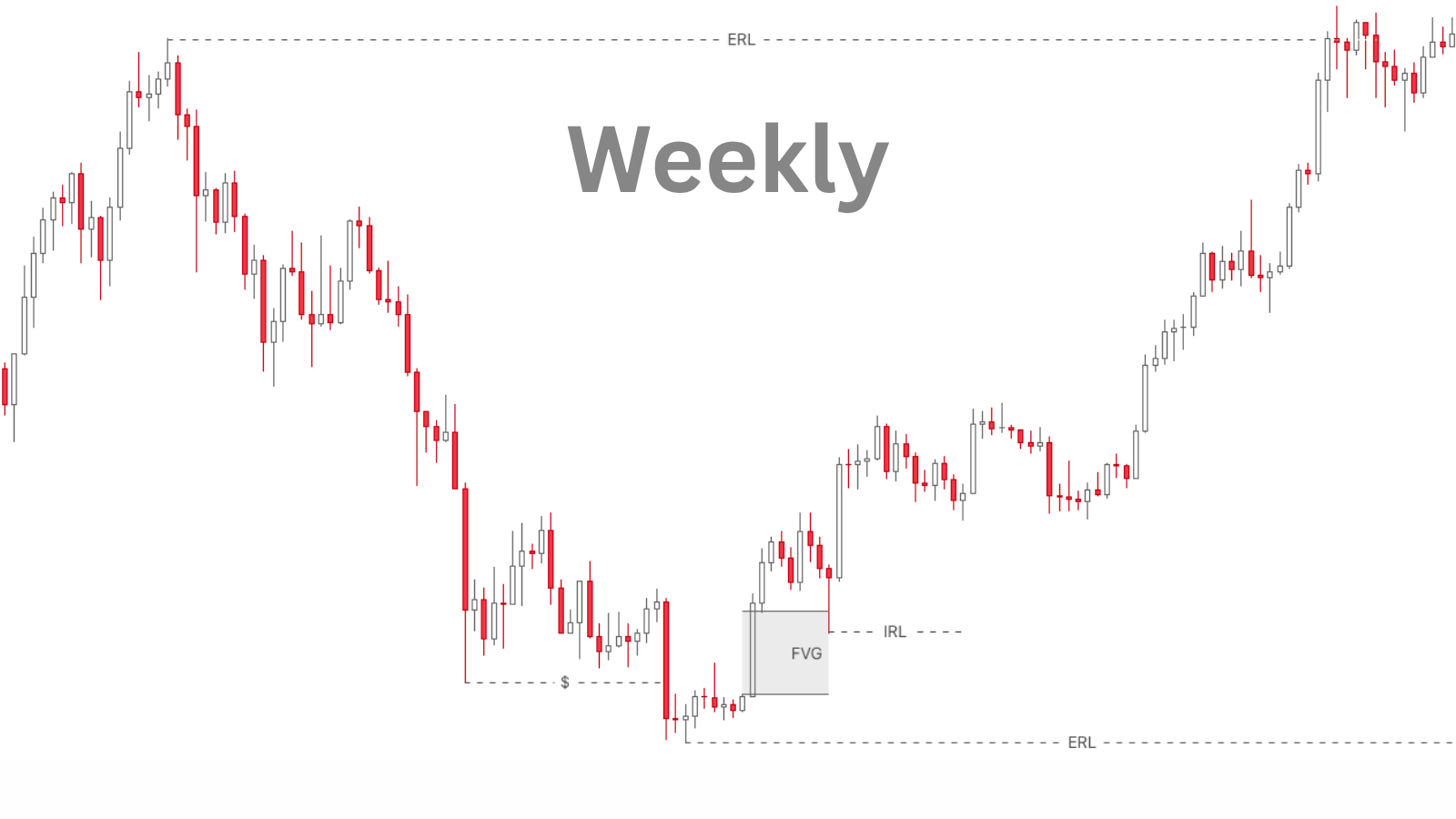 Figure 3: IRL at an FVG on the Weekly timeframe
 Figure 4: IRL on the Daily timeframe
What is an Inside Bar?
An Inside Bar is a child candle that forms entirely within the range of the previous mother bar candle.
This is a price pattern that usually appears after a strong move in the market, expressing a phase of accumulation or rest within the wave before price continues onward.
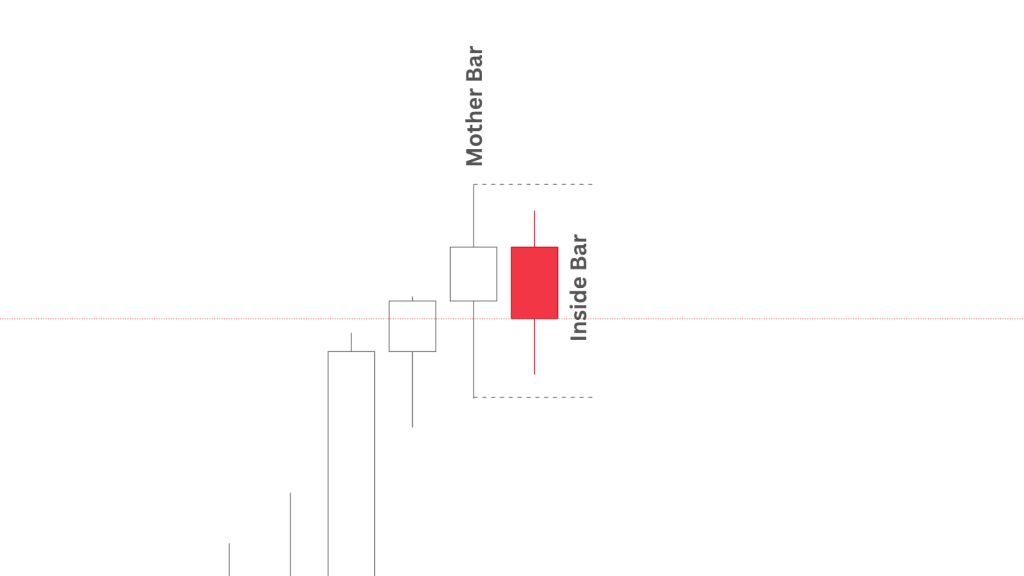 Figure 5: An Inside Bar appearing on the Weekly timeframe
The figure above shows an inside bar candle lying entirely within the previous candle, on the Weekly timeframe.
When brought down to a smaller timeframe (H4), the high and low of the mother candle become ERL, and the inside bar candle moves to take liquidity from IRL to ERL.
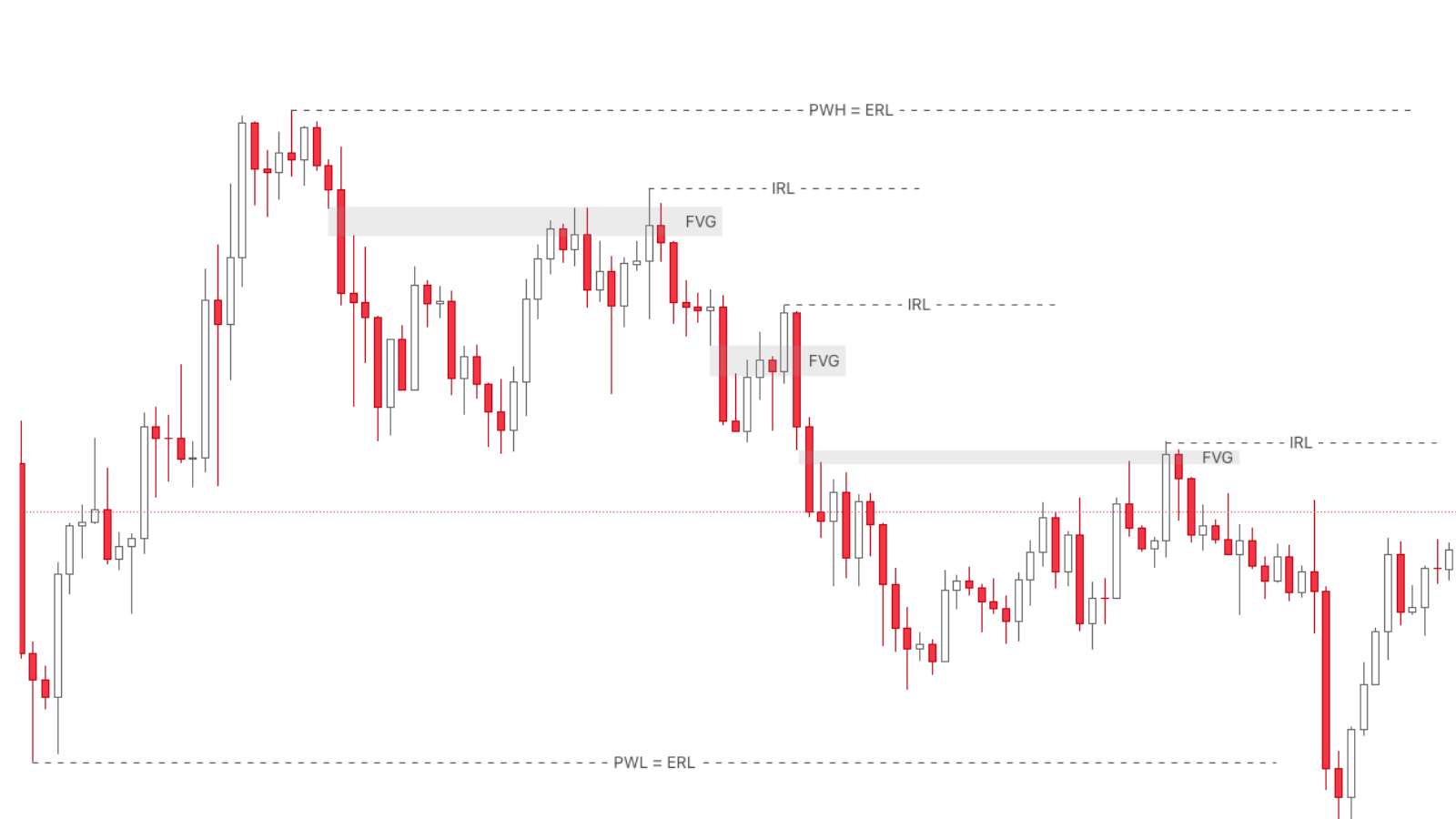 Figure 6: Bringing an Inside Bar down to H4
HRLR & LRLR
First, we need to clearly distinguish the two forms of price reaction to Liquidity:
- Liquidity Sweep is a price move that sweeps liquidity before reversing (a wick rejection or a candle close).
- Liquidity Run is a price move that takes liquidity and continues further in the direction of the main trend.
What is HRLR?
High Resistance Liquidity Run (HRLR) is liquidity that price encounters a lot of resistance in approaching.
In illustration 7, we see HRLR is an old low that, after performing a liquidity sweep through the previous low, rejected upward, and was then protected by swing lows.
Figure 8 is an old high that sweeps liquidity through the previous high and then rejects downward, protected by swing highs.
This protection makes HRLR difficult to sweep and requires a great effort from price to penetrate.
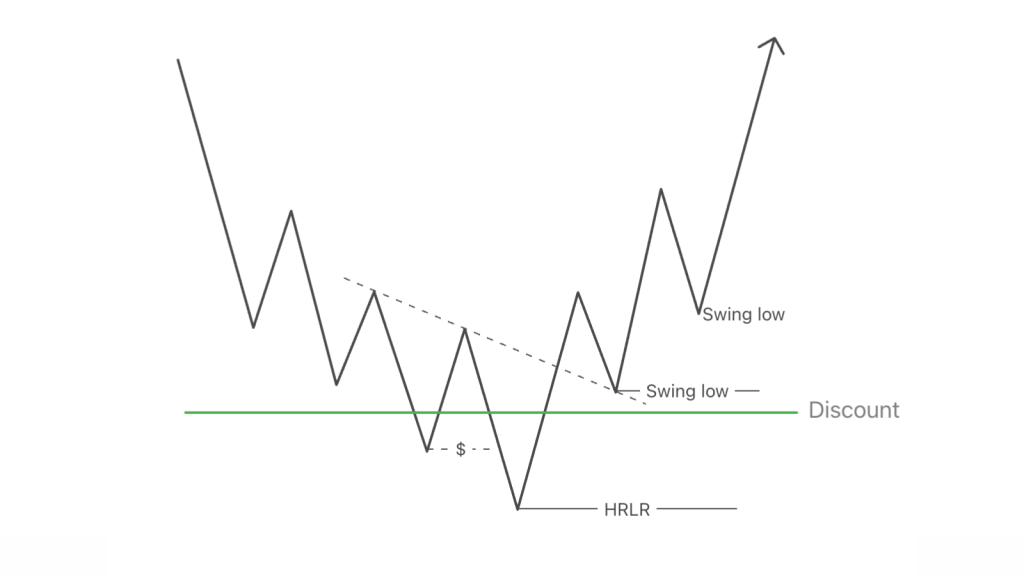 Figure 7: HRLR protected by swing lows
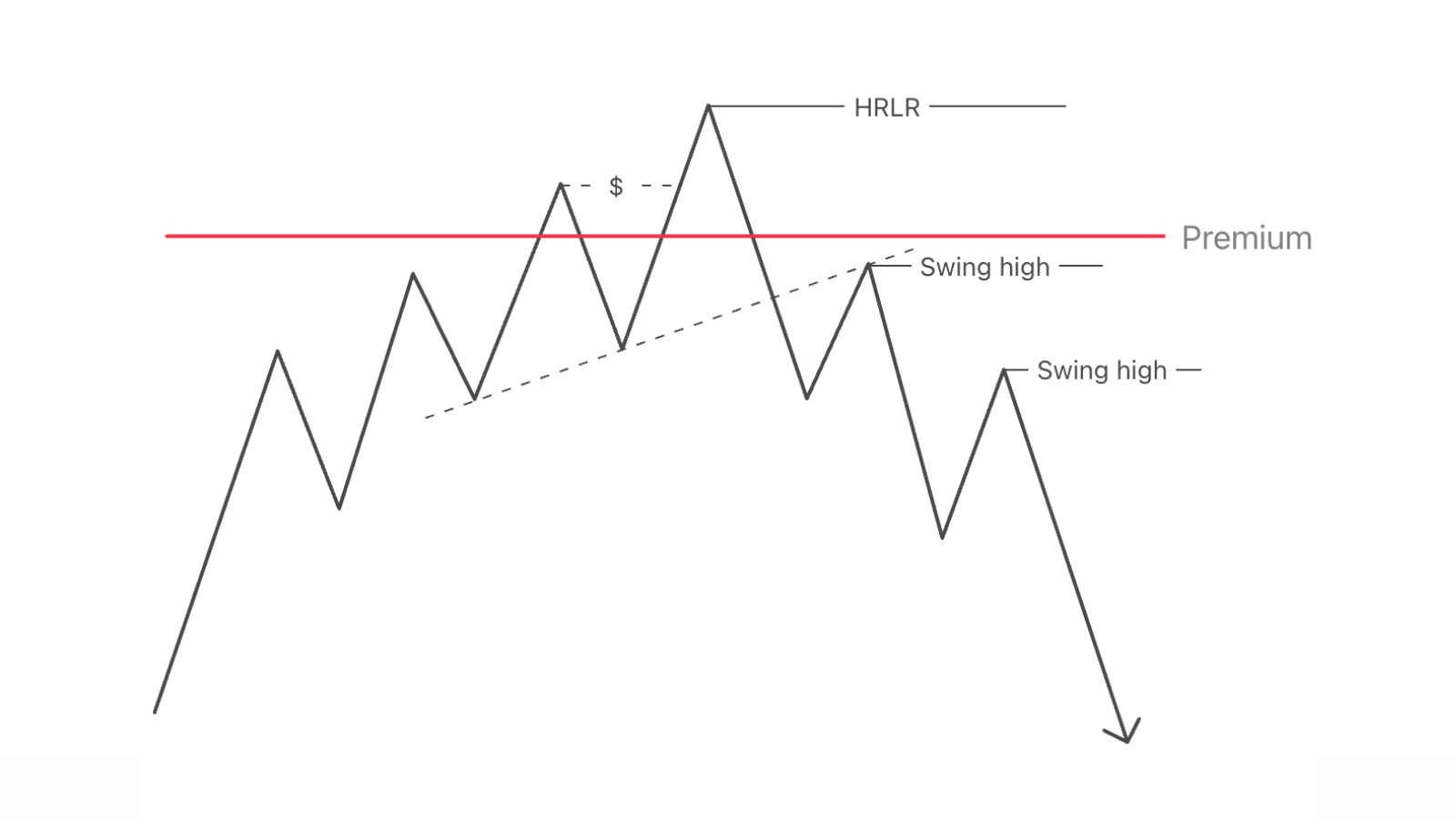 Figure 8: HRLR protected by swing highs
Characteristics of HRLR:
- Located on the same side as the main trading structure.
- There are many swing highs/swing lows in between protecting the old high/low.
- Price moves sluggishly and needs a great effort to approach HRLR.
- Potential risk if trading toward HRLR.
What is LRLR?
The opposite of HRLR, Low Resistance Liquidity Run (LRLR) is liquidity through which price moves easily and quickly due to a lack of protection.
In the figure below we see LRLR is easily run through by price (a Liquidity Run) because there is no protection from any highs or lows.
 Figure 9: LRLR is not protected
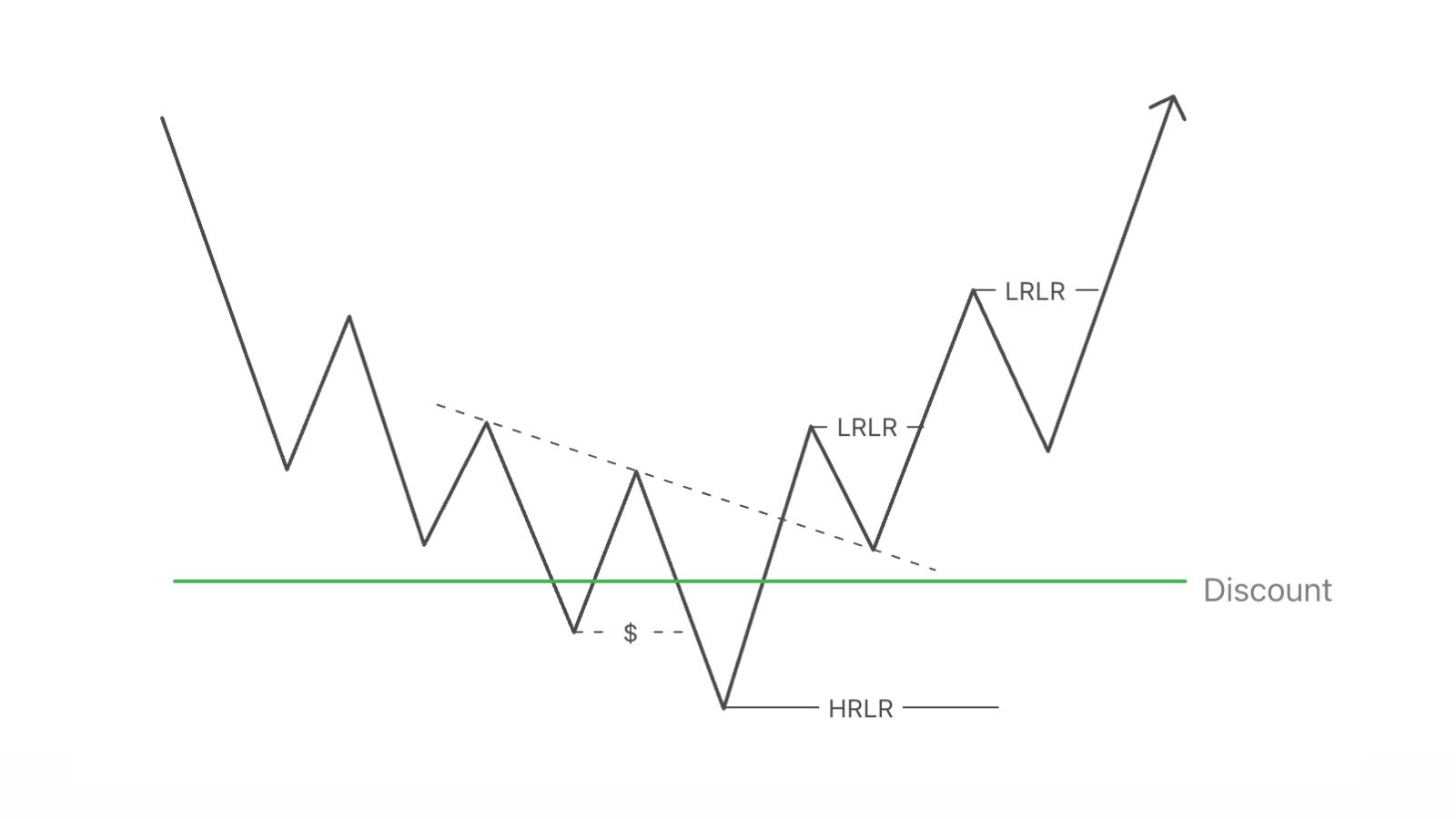 Figure 10: LRLR is easily penetrated
Characteristics of LRLR:
- Located on the opposite side of the main trading structure.
- Price accelerates strongly, often leaving behind an FVG or a liquidity void.
- Very few swing highs/swing lows between the starting point and the liquidity target.
- The liquidity zone is approached smoothly, suitable for trend-following trades.
According to ICT, LRLR is the ideal condition for entering a trade, because:
- Higher success rate due to encountering little resistance.
- Trades take place quickly, delivering clear results.
- Easy to build confidence and consistency through short targets, for example 5 to 10 points on the S&P 500 index.
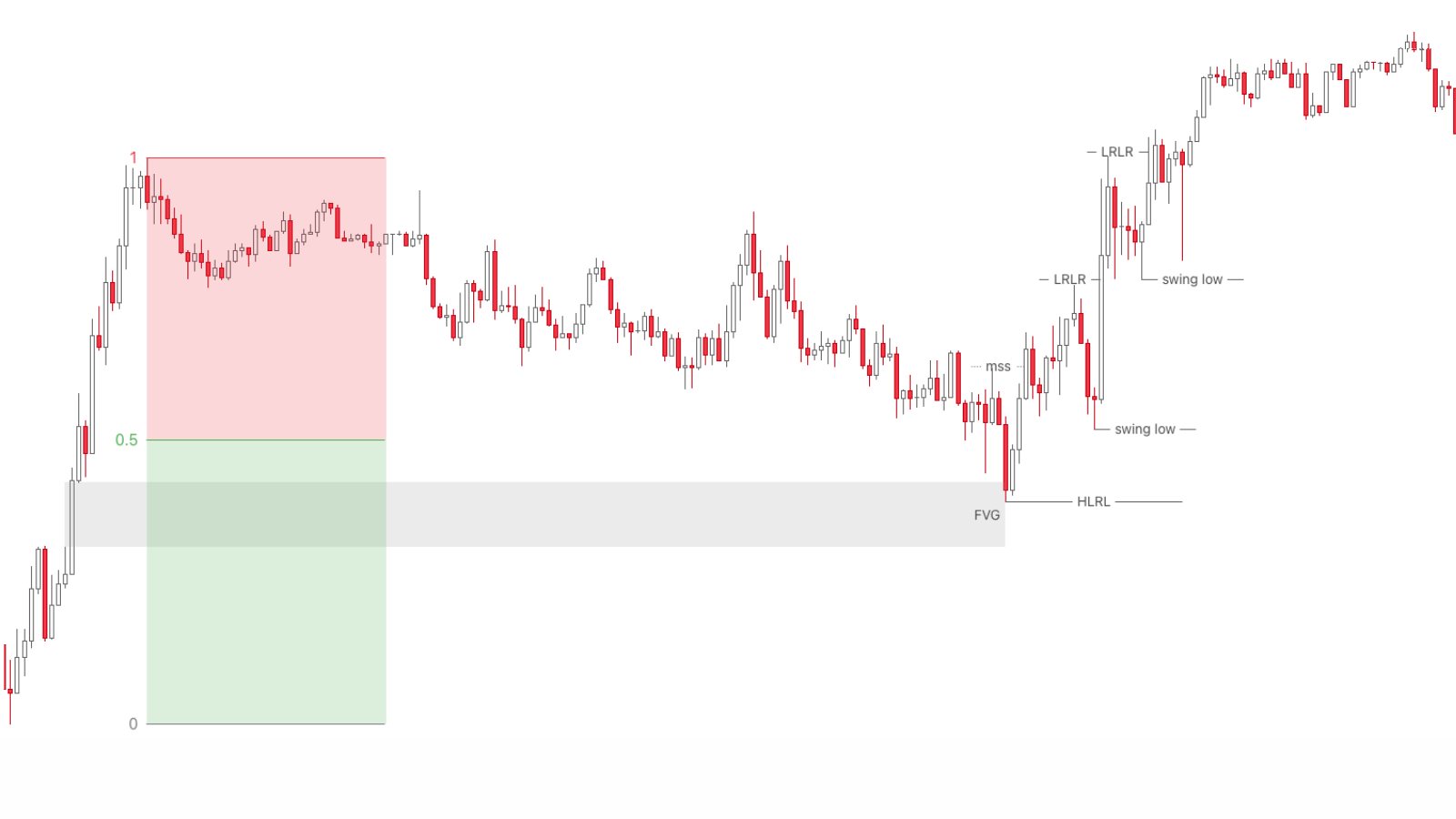 Example of HRLR and LRLR
Thus, Trading Hub 3.0 has finished the 3 most important parts of ICT on liquidity. In the coming chapters we will learn about structure and entry models.
5/5 - (12 votes)
Read structure 10x faster with JUKA
JUKA maps SMC structure — swings, BOS, CHoCH and inducement zones — automatically on any TradingView chart. No more hand-drawing structure for hours.
Get JUKA — $150