Trading Hub 3.0 (Part 12): Trading with the Flip Entry Module – SMC
Usually we will have common entry module patterns such as CHoCH entry, Flip entry, and Sweep entry. All three are applied when the market takes liquidity and takes all of retail's money. You can find an entry point on the small timeframe.
In this part, we will study the Flip Entry Module.
What is a flip entry trade in SMC?
Entering a trade according to a Flip is a common and highly effective method in SMC. When price touches the HTF POI area, you must switch to the LTF and wait for confirmation. If price has not yet broken through a recent high or low to create a CHoCH but has already reacted to create an OB, and then cannot hold the OB and fails, this process is called the Flip Entry Module, meaning demand is converted into supply D2S, or supply is converted into demand S2D.
As usual, we will go from HTF to LTF and look at how to identify a POI, and when price touches the POI, how to identify the entry at the LTF. Let us go into the details below!
Instructional video on flip entry
Supply to Demand (S2D)
The first case is Flip Entry S2D, meaning supply converts to demand, applied when the market trend is bearish.
Flip with IDM
When price breaks through an old low and touches the POI at the HTF, if price closes below the old low and reverses upwards, however before passing the pullback to create a CHoCH, price touches a supply zone, which is an unmitigated OB, and reacts there, then price creates a demand zone and goes up to create a CHoCH, we call that a Flip, meaning converting from supply to demand (S2D).
In reality, this is exactly the CHoCH entry pattern with IDM that we went into in depth in Part 10. After creating a CHoCH, price returns to pass the demand zone (which is the Inducement). This is exactly the moment when we look for a Buy trade at the LTF. Prioritise the extreme OB. If no OB appears, enter a trade according to SCOB.
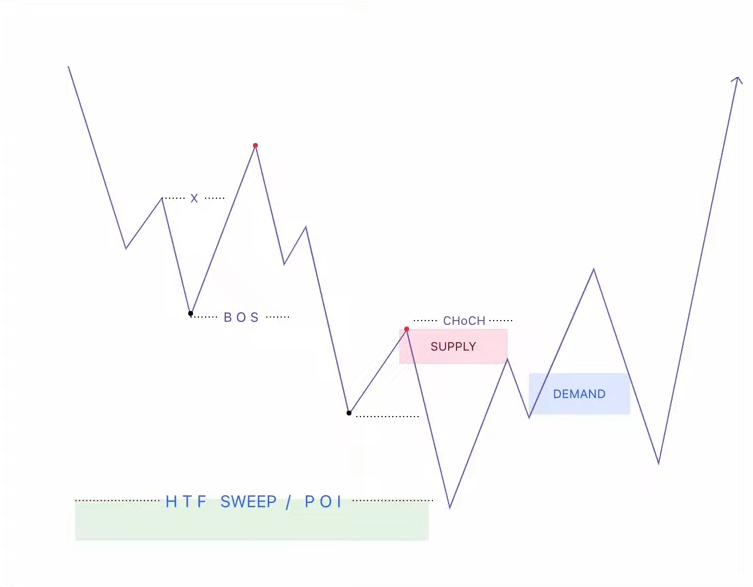 Flip entry S2D with IDM
In the case where price does not return to take liquidity at the demand zone but goes straight up to create an IDM above the demand zone, we will wait for price to break through this IDM and touch the demand zone to look for a Buy trade. If the demand zone fails, price breaks through it and goes down to touch the extreme OB, we can enter a Buy trade here.
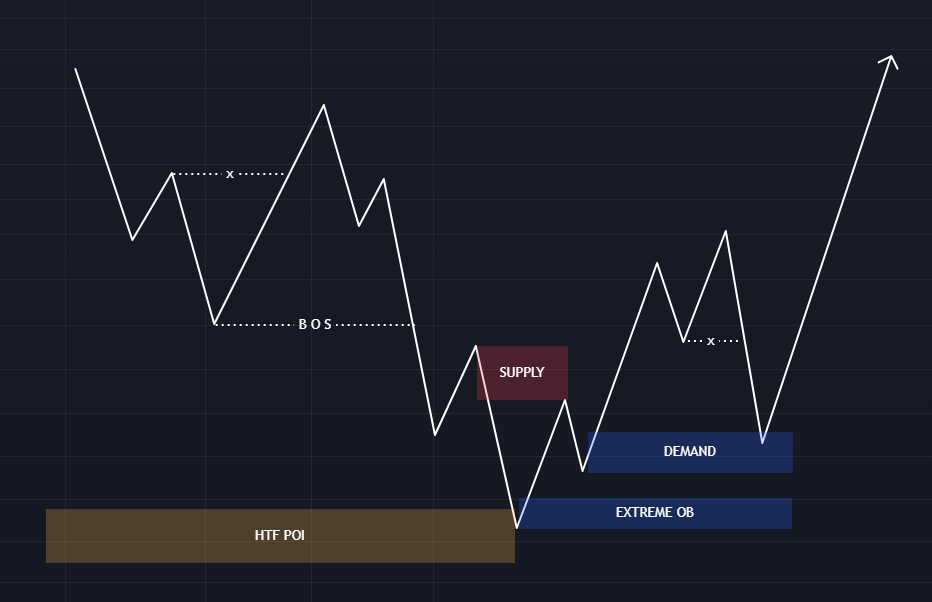 Entering a trade with a flip with inducement above the demand zone
In essence, we still wait for price to pass IDM and only then set up an entry, similar to entering a trade with CHoCH with IDM.
Flip without IDM
Similar to the CHoCH entry pattern without IDM, if price sweeps liquidity and touches the HTF POI (that is, closes above the old low), price reverses upwards, touches a supply zone and reacts to create a demand zone, and only then goes up to pass the first pullback to create a CHoCH, we call that the Flip S2D without IDM entry pattern.
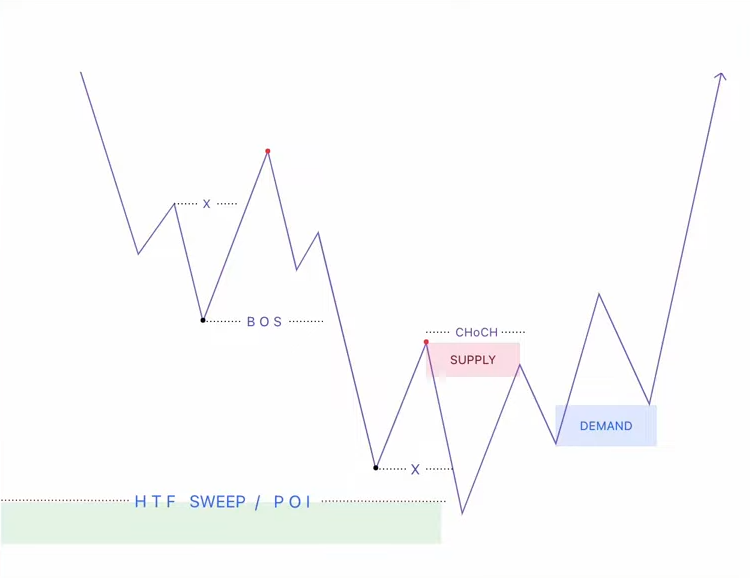 Flip S2D without IDM
To enter a trade, we do not need to wait for an IDM sweep (because liquidity was already swept at the HTF POI beforehand). We only need price to pull back to the OB in the demand zone to be able to look for an entry here.
If price creates an IDM above the demand zone, we should still wait for price to return to the reaction area, which is the demand zone, to look for an entry point. Sometimes price will go up right when it touches the OB at IDM, but we should comply with the principle that the demand zone is a better reaction area for entering a trade.
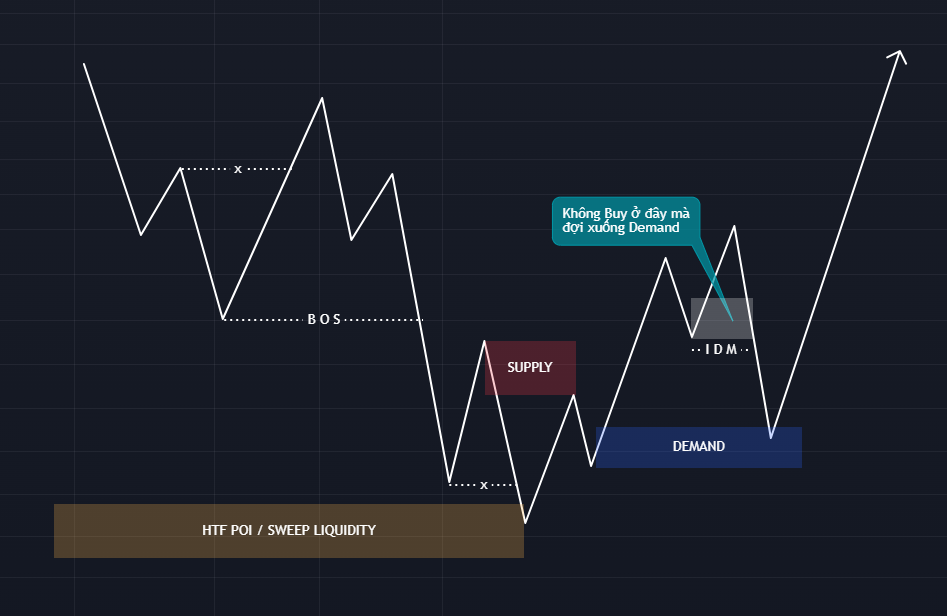 Buy at the demand zone
Demand to Supply (D2S)
Every setup in a bearish market is applied in the same way for a bullish market.
Flip with IDM
When price passes an old high (closing above it) and touches the HTF POI, then turns back to touch a demand zone (which is an OB) but has not yet created a CHoCH, then reacts and creates a supply zone (which is an OB) and then goes down to pass the first pullback to create a CHoCH, we call this flip from demand to supply (D2S).
To find an entry point, we wait for price to return and pass the supply zone (which acts as inducement). We can Sell when a SCOB is created, or prioritise when price touches the extreme OB.
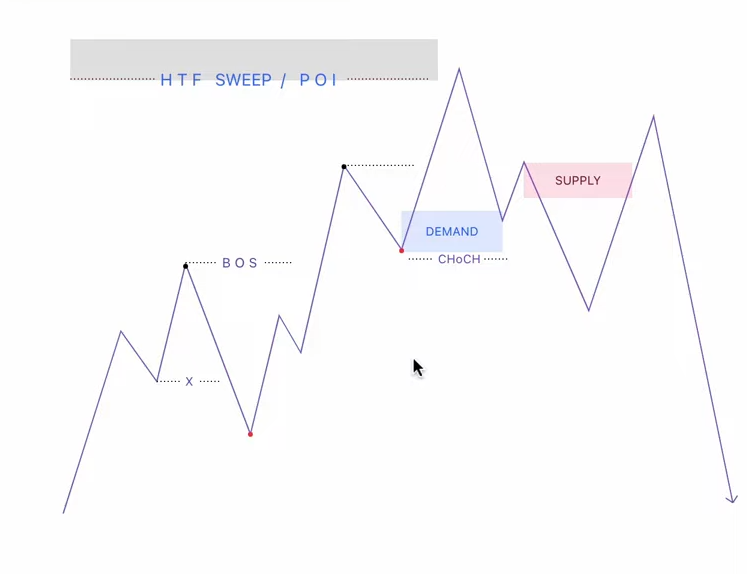 Flip D2S with IDM
Flip without IDM
When price sweeps an old high (closing below it) and touches the HTF POI, then reverses to touch a demand zone but has not yet created a CHoCH, price reacts there and creates a supply zone, then goes down to pass the first pullback to create a CHoCH, we call that a flip from demand to supply (D2S).
To find an entry, we wait for price to return to tap the OB in the supply zone and look for an entry point at the LTF.
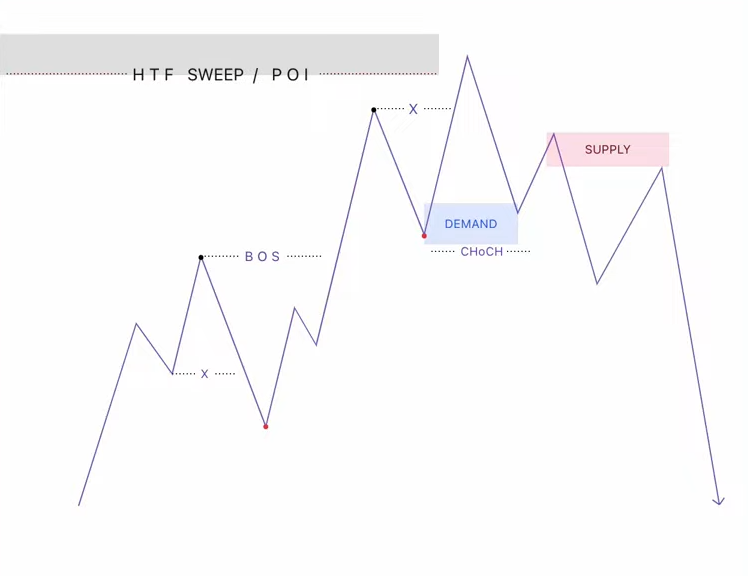 Flip D2S without needing IDM
Let us analyse the following specific example to understand Flip entry trades more clearly.
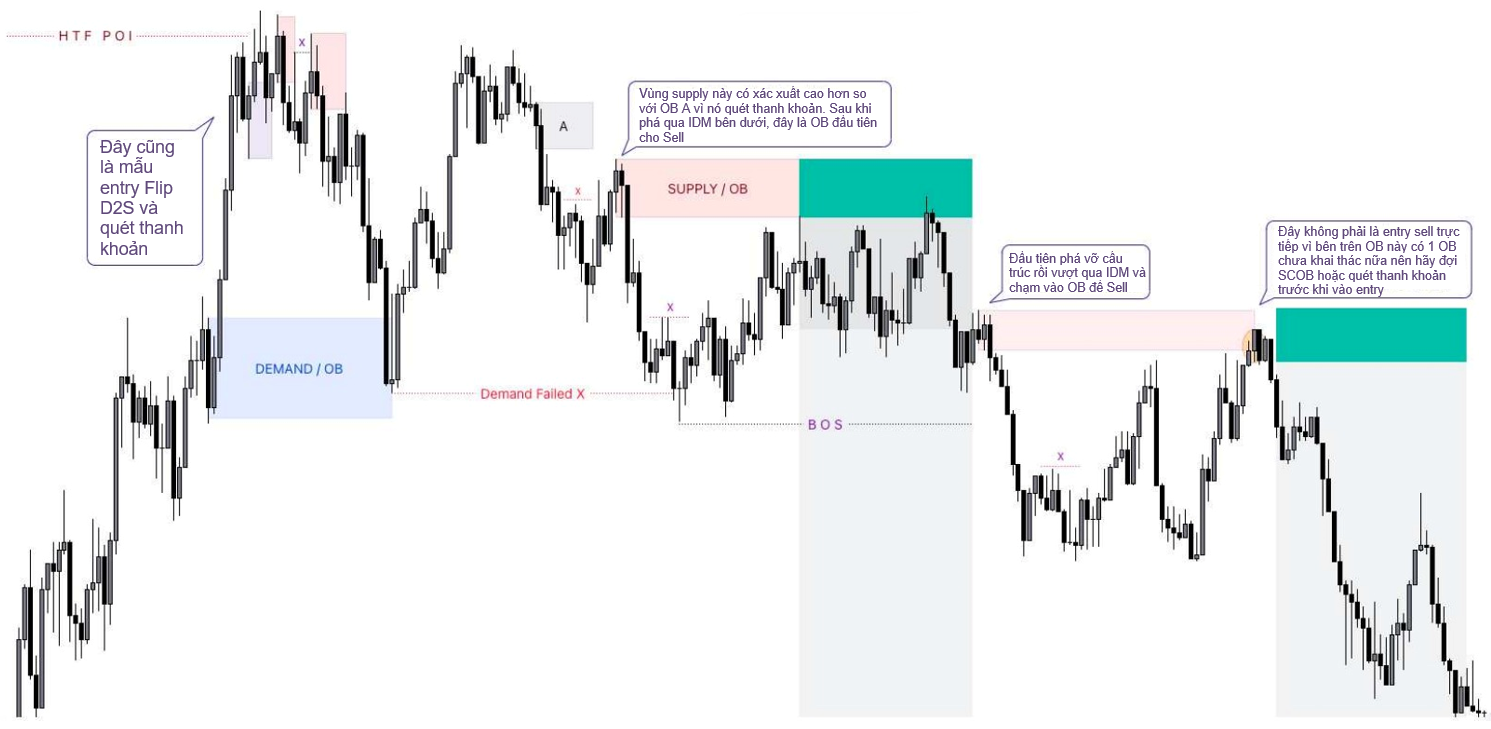 Example of a flip entry
5/5 - (1 vote)
Read structure 10x faster with JUKA
JUKA maps SMC structure — swings, BOS, CHoCH and inducement zones — automatically on any TradingView chart. No more hand-drawing structure for hours.
Get JUKA — $150