CHoCH Explained So Simply a Beginner Gets It in One Minute
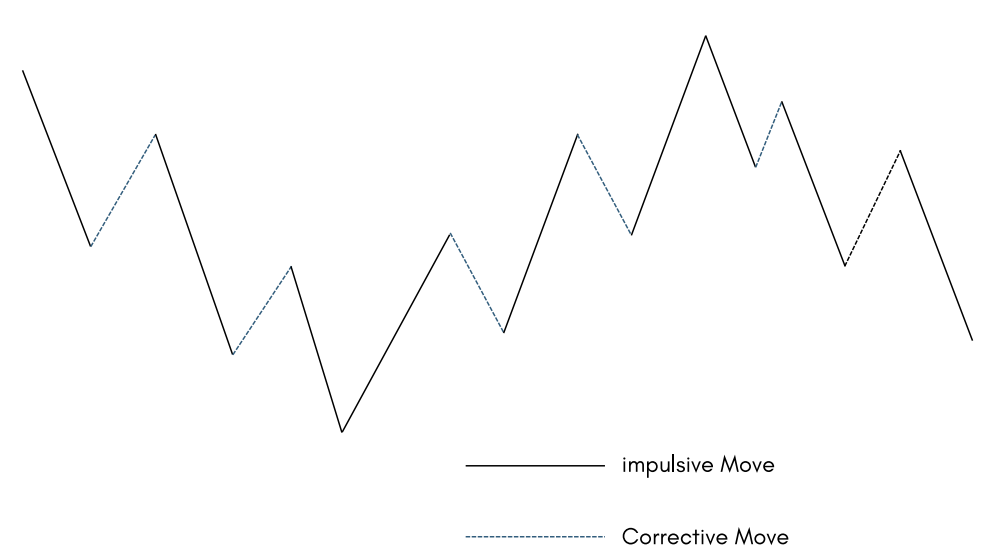
A trend has a character: strong impulsive legs in one direction, weak corrective legs against it. CHoCH is the moment that character flips.
Forget the complicated definitions. CHoCH — Change of Character — is simply the first sign that a trend has stopped behaving the way it used to. An uptrend that kept making higher highs suddenly fails and breaks down through its last higher low. That first break against the trend is the CHoCH. Everything else is detail.
Think of a trend as a character
Every trend has a personality. In a healthy uptrend, the strong legs point up (impulsive moves) and the weak legs point down (corrective pullbacks). Buyers are in control, and the chart "behaves" like it. In a healthy downtrend it is the mirror image: strong legs down, weak legs up.
CHoCH is the moment the personality changes — when price does something it had not done during the whole trend. Not a deep pullback. Not a scary candle. A structural break against the established character. If BOS (Break of Structure) means "the trend did what it always does, again," CHoCH means "the trend just did the opposite for the first time."
Bullish CHoCH, step by step
- Price is in a downtrend: lower highs, lower lows. Sellers are in control.
- A push down makes a new low — but this time the follow-through is weak, or the low gets swept and price recovers quickly.
- Price rallies and, for the first time, closes above the most recent lower high — the high that started the last leg down.
- That close is the bullish CHoCH. The downtrend's character has changed. Buyers have done something they could not do before.
Note what CHoCH is not: it is not a promise the market will rocket up. It is the first warning that the old trend may be finished and a reversal may be starting. Confirmation comes later — from the new structure that builds after it.
Bearish CHoCH, step by step
- Price is in an uptrend: higher highs, higher lows. Buyers are in control.
- A rally makes a new high — possibly sweeping the stops above the old high first — then stalls.
- Price sells off and closes below the most recent higher low — the low that launched the last leg up.
- That close is the bearish CHoCH. The uptrend's character has changed; sellers have broken something the buyers defended the entire trend.
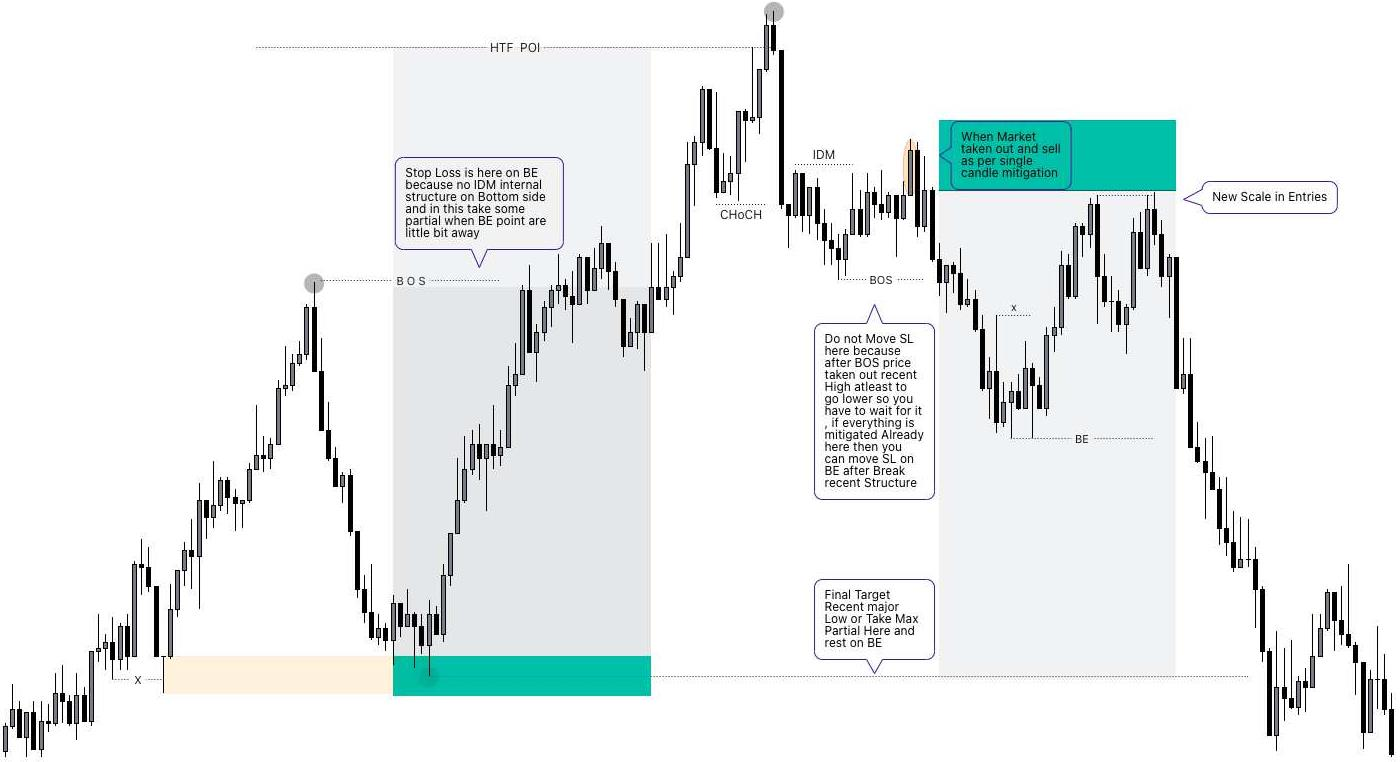
On a real chart it looks like this: the CHoCH prints at the turn, and the BOS that follows confirms the new direction has taken over.
The one rule you cannot bend: the candle close
Beginners get one thing wrong more than anything else — they call a CHoCH on a wick. A wick through the level is not a break; it is a liquidity grab, the market raiding stops before deciding anything. The rule from our BOS/CHoCH rules guide applies to both: only a candle close beyond the level counts.
Making this one distinction will delete most of your false reversal calls overnight. It is also where drawing by hand gets tiring — checking closes on every swing, on every timeframe, all day. JUKA labels BOS and CHoCH automatically using the close rule, so the label you see is the label the rule would give you.
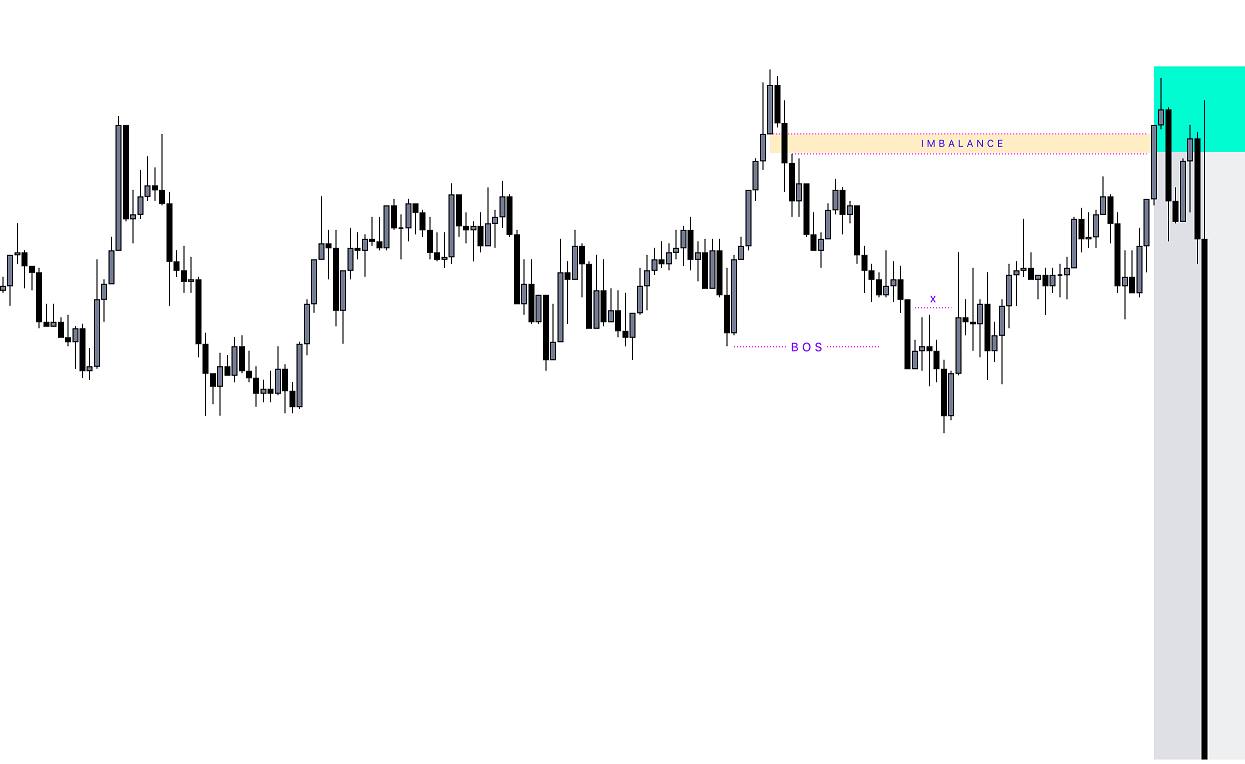
For contrast, a BOS: price breaks the level with the trend and keeps going. Same mechanics — opposite meaning.
The inducement check
One quick quality filter before you trust a CHoCH: was there inducement before it? Inducement is the small trap move — usually an early, tempting break or a sweep of a minor high or low — that lures traders in just before the real break. A CHoCH that arrives after inducement has been taken is a far higher-quality signal than one appearing out of nowhere, because the liquidity that fuels reversals has already been collected. No inducement yet? Be patient. The better version of the signal is usually still coming.
The 3 mistakes beginners make with CHoCH
- Calling the wick. A spike through the level that closes back inside is a sweep, not a CHoCH. Wait for the close — every time, no exceptions.
- Trading the first CHoCH as a guarantee. CHoCH is a warning, not an entry. The first break against the trend fails plenty of times; the trend can resume. Wait for the new structure to build, or for price to return to a point of interest with lower-timeframe confirmation.
- Mixing timeframes. A 1-minute CHoCH inside a 4-hour uptrend is noise, not a reversal. Label structure on one timeframe, respect the bigger one, and let the lower timeframe do only the confirming.
CHoCH in one paragraph
Trends behave in character: strong legs with the trend, weak legs against it. CHoCH is the first structural break against that character, confirmed by a candle close — in an uptrend, a close below the last higher low; in a downtrend, a close above the last lower high. Check that inducement came first, respect your timeframe, and treat it as the start of a process, not a finish line. That is the whole concept — everything else you will ever read about CHoCH is commentary on this paragraph.
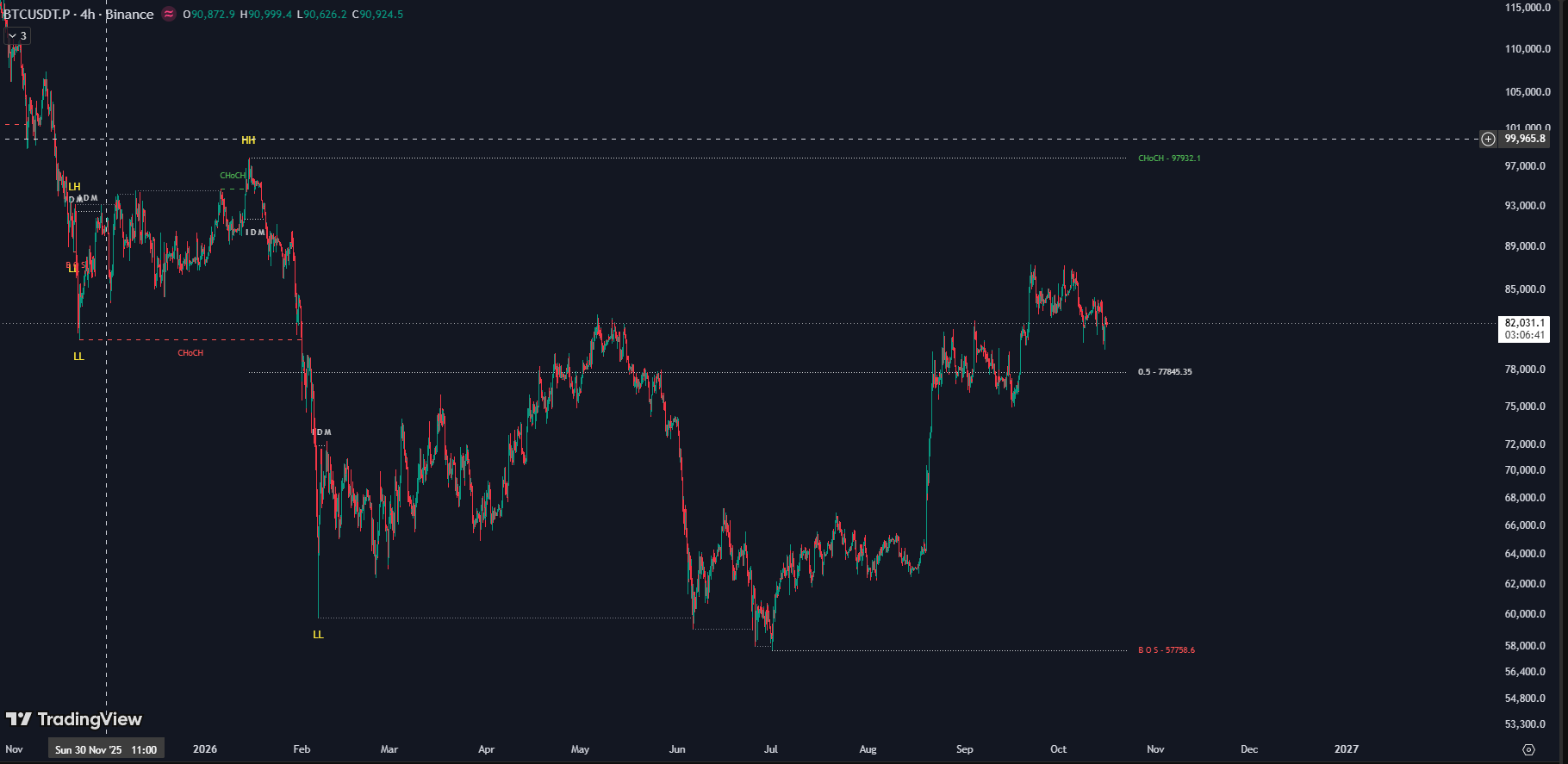
Simple to understand. Tedious to draw by hand.
The complete method — structure, liquidity, entries, risk — is in the free 36-page Trading Hub 3.0 handbook. And JUKA labels every BOS and CHoCH for you, automatically, on any TradingView chart.
The complete Trading Hub 3.0 source code (Pine Script v5) — yours to own forever, $150 one-time.
Download the Free Ebook Get JUKA — $150