Liquidity Grabs EXPOSED: How Banks Hunt Your Stop Loss (And How to Flip It)
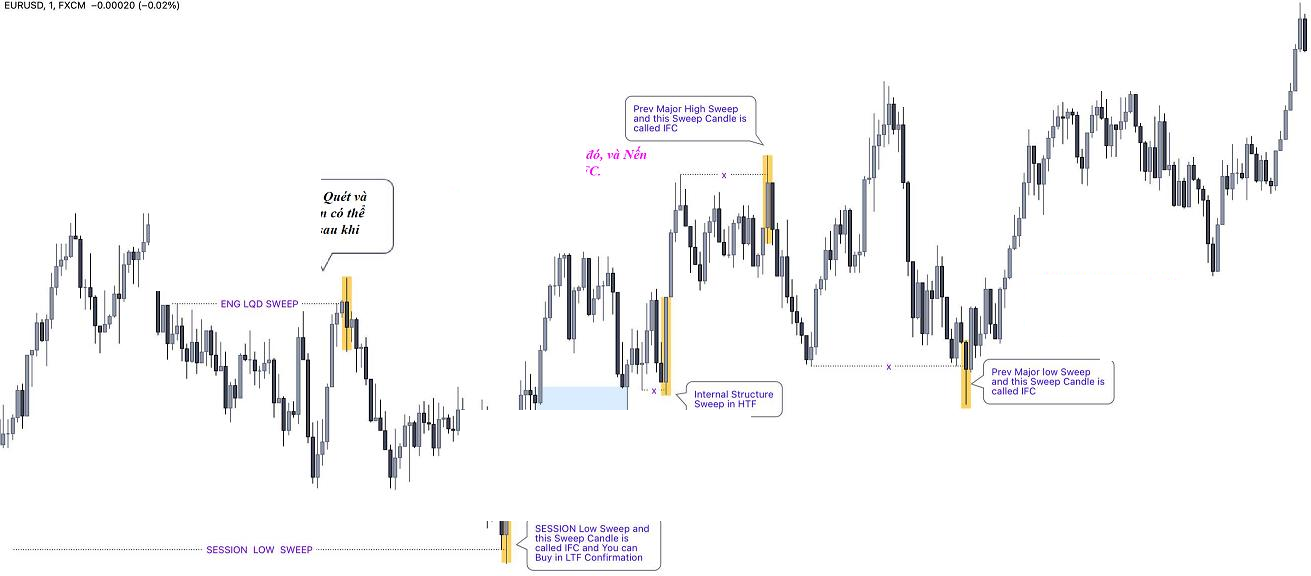
Real grabs on a live chart: session lows, previous major highs and lows — swept first, traded second.
Your stop loss is not hidden. It sits exactly where every textbook told you to put it — a few pips beyond the obvious high or low — and that is precisely why it keeps getting taken. Big players cannot fill large orders out of thin air: they need a crowd of stops and breakout orders on the other side of their trade. Your stop is that crowd. Once you see price as something that travels toward pools of stops, the "random" wicks that keep knocking you out stop looking random.
What a liquidity grab actually is
A liquidity grab (also called a sweep or stop hunt) is a quick push beyond an obvious level — a swing high, a swing low, a session extreme — that triggers the stops and breakout entries parked there, then reverses. The push is not the real move. It is the collection round before the real move: price raids the pool, fills the large orders waiting there, and only then travels in the intended direction.
This is why so many "perfect breakouts" fail within minutes. The breakout was never meant to continue. It was meant to make breakout buyers provide exit liquidity — and make stopped-out sellers provide entry liquidity — for the other side.
Where the stop pools sit
Stops cluster in predictable places, because retail traders all read the same books. Learn to see these pools and you can predict where price is likely to be drawn next:
- Equal highs and equal lows. Two or more touches at the same price build a visible line — and a wall of stops just beyond it. The "prettier" the double top or double bottom looks, the bigger the pool behind it.
- Session highs and lows. The Asia range high and low are classic targets for London and New York. At least one session extreme gets raided on most days.
- Previous day high and low (PDH / PDL). Yesterday's extremes are the most-watched levels on the chart — which makes the stops resting beyond them impossible to ignore.
- Round swing points. Any clean, obvious swing high or low that a beginner can spot in two seconds has stops behind it. Obvious to you means obvious to everyone.
Before you think about entries, mark the pools. Price moves from pool to pool — your job is to know which pool is closest, and whether it has been taken yet.
Grab or real breakout? The wick-versus-close rule
Here is the test that separates a grab from a genuine break — the same rule behind valid BOS and CHoCH: a wick through the level is a grab; a candle close beyond the level is a break.
When price pierces a high and the candle closes back inside the range, the level was raided, not broken. The stops are gone, the fuel is spent, and price is free to reverse. When a candle closes beyond the level and holds, acceptance has happened — that is structure actually changing, and continuation becomes the higher-probability read.
Traders who treat every wick as a breakout spend their careers buying the top tick of grabs. Traders who wait for the close let the trap spring on somebody else.
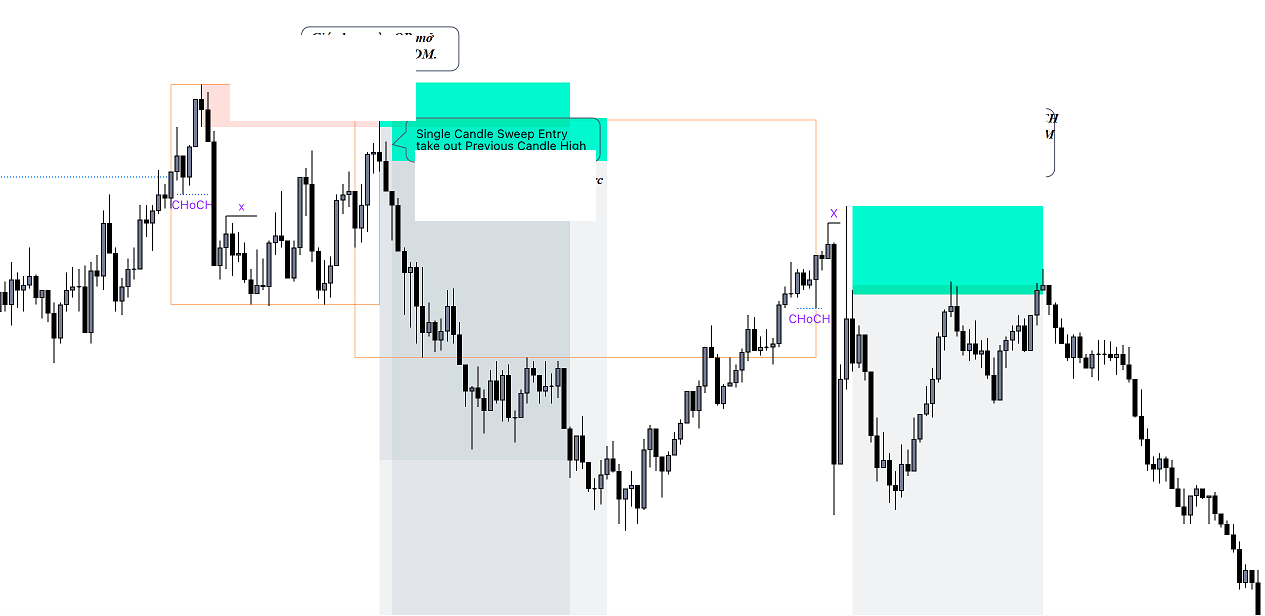
The single-candle version: one candle raids the previous candle's high, fails to hold, and the CHoCH that follows confirms the flip.
How to flip it: trade the trap, not the breakout
Once you expect the grab, you can position for what comes after it instead of donating to it. The sequence:
- Mark the pool in advance. Equal highs, session extremes, PDH/PDL near your higher-timeframe point of interest. No pool nearby, no trade — the grab needs somewhere to happen.
- Wait for the sweep. Let price take the level out. Do nothing while it does. Your signal has not appeared yet.
- Drop to the lower timeframe and wait for CHoCH. After the sweep, the first lower-timeframe change of character against the sweep direction is your confirmation that the raid is over and the real move is starting.
- Enter at the point of interest, stop beyond the sweep extreme. The sweep high or low is your invalidation — if price takes it out again and closes beyond it, the read is wrong. Target the liquidity on the opposite side: the next untaken pool.
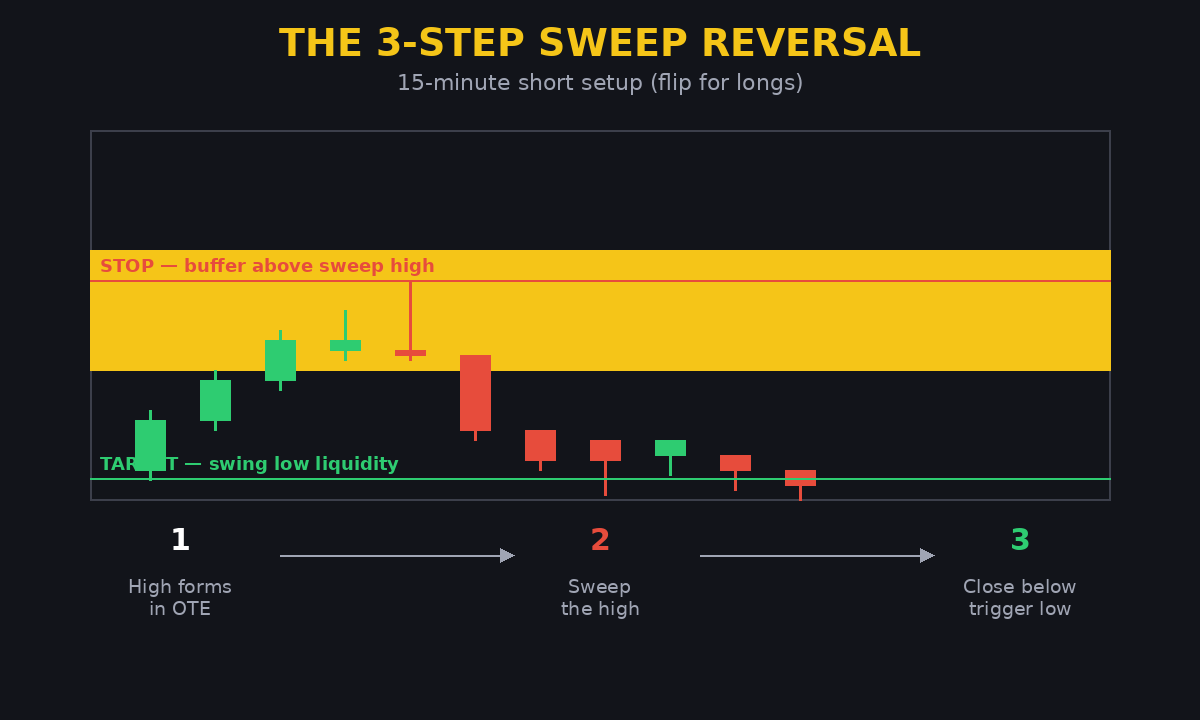
The flip, as a model: sweep first, confirmation second, entry third — with the stop parked above the sweep extreme, never on it.
Mapping pools, sweeps and CHoCH confirmations by hand on every chart works — traders have done it for years — but it is slow, and a missed pool is a missed trade. That is exactly why we built JUKA: it maps structure and liquidity automatically on any TradingView chart, so the grab is labeled before it completes instead of after you have been stopped out.
The grab checklist
- Stops are fuel. Obvious levels are where the fuel sits.
- Mark the pools first: equal highs/lows, session extremes, PDH/PDL.
- Wick through the level = grab. Close beyond the level = break. Never confuse them.
- Never chase the sweep. Wait for the lower-timeframe CHoCH after it.
- Stop beyond the sweep extreme; target the next untaken pool.
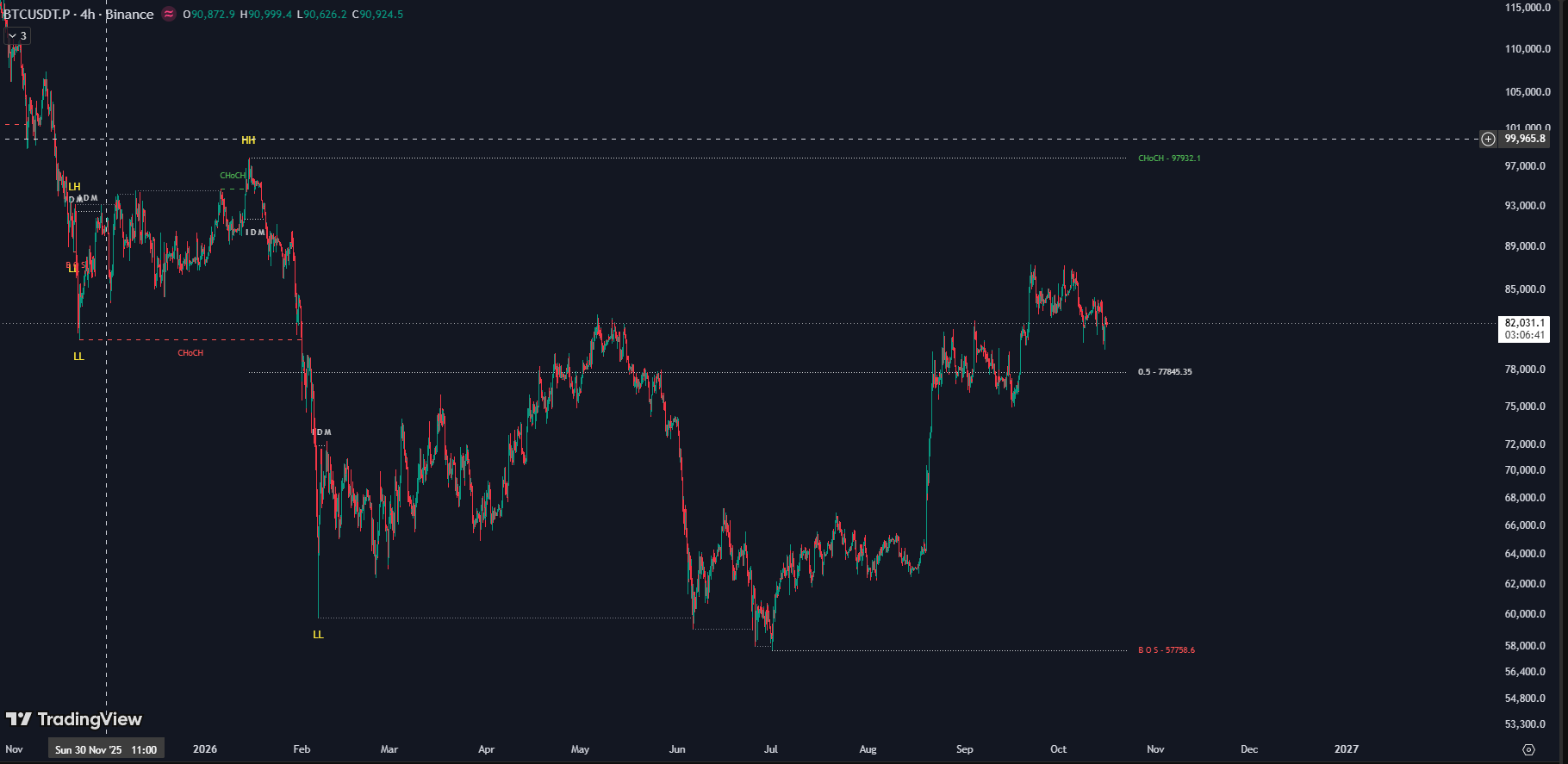
Learn the manual way. Then automate it.
Everything in this guide — structure, liquidity, sweeps, entries — is inside the free 36-page Trading Hub 3.0 handbook. And if you don't want to draw it all by hand, JUKA labels it automatically on your charts.
The complete Trading Hub 3.0 source code (Pine Script v5) — yours to own forever, $150 one-time.
Download the Free Ebook Get JUKA — $150