ICT Part 2: The Complete Guide to FVG, iFVG, IFVG, LV, BPR
In the ICT method, the FVG and its variants are very important price zones, expressing the supply–demand relationship and providing suitable places to open trade positions.
Grasping the secrets of the FVG will help traders build a trading system of their own and increase their probability of winning.
What is a Fair Value Gap – FVG?
The Fair Value Gap (FVG) in ICT is a three-candle structure, expressing a price gap between the high of the first candle and the low of the third candle. This gap appears when price does not return to test that price zone, creating an untraded zone.
When we see an FVG form, we can understand that one side is controlling the market and the other side is exhausted.
The exhausted side does not have enough opposing orders, so price slips quickly and creates a gap, called an imbalance.
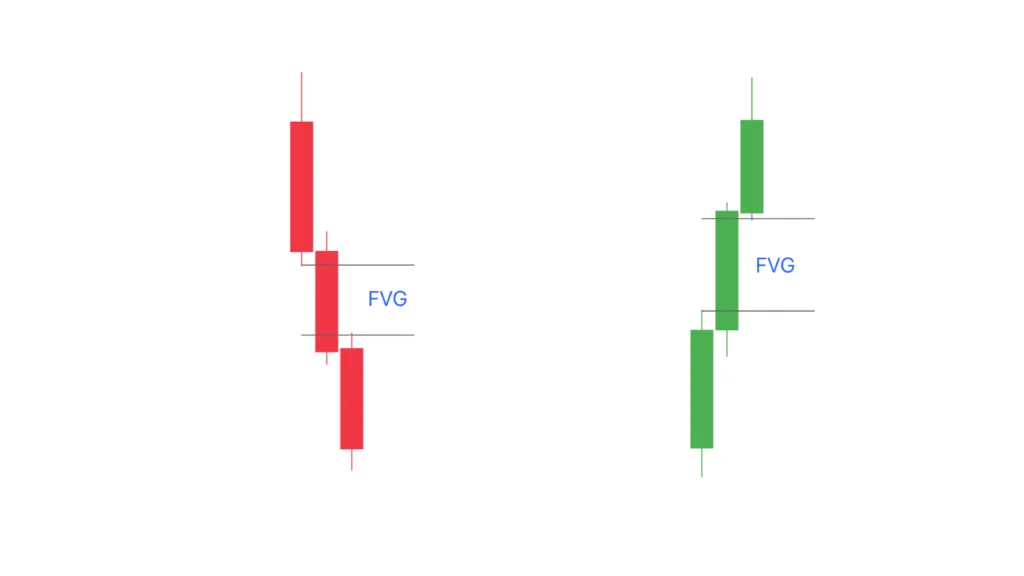 What is an FVG?
To identify a standard FVG according to ICT, you need to find a candle with the largest body among three consecutive candles. Then identify the gap between the two candles on either side (measured from the candle wicks).
Characteristics of the Fair Value Gap
- The wider the FVG, the more powerful it is.
- Price may return to fill the FVG before continuing the main trend, or it may not.
- When many FVGs are created, price does not necessarily have to return to fill all of these FVGs (you can use the PD Array to determine the price level it will return to).
In the article series on SMC, the FVG is referred to as IMB in part 3.
How to use the Fair Value Gap
An FVG can be used as:
- An entry point.
- A price target.
- Or a tool to measure the shift in market sentiment, when price moves from the buy side to the sell side, or vice versa.
- In cases where there are many FVGs, we should choose the FVG located within a PD Array zone.
What is a Liquidity Void?
A Liquidity Void (LV) is a price zone where only one side of liquidity is expressed through strong, one-directional candles (creating consecutive FVGs).
An LV usually occurs when there is strong news or at the session open, as price breaks out of a sideways zone decisively, leaving behind gaps without enough orders to be matched.
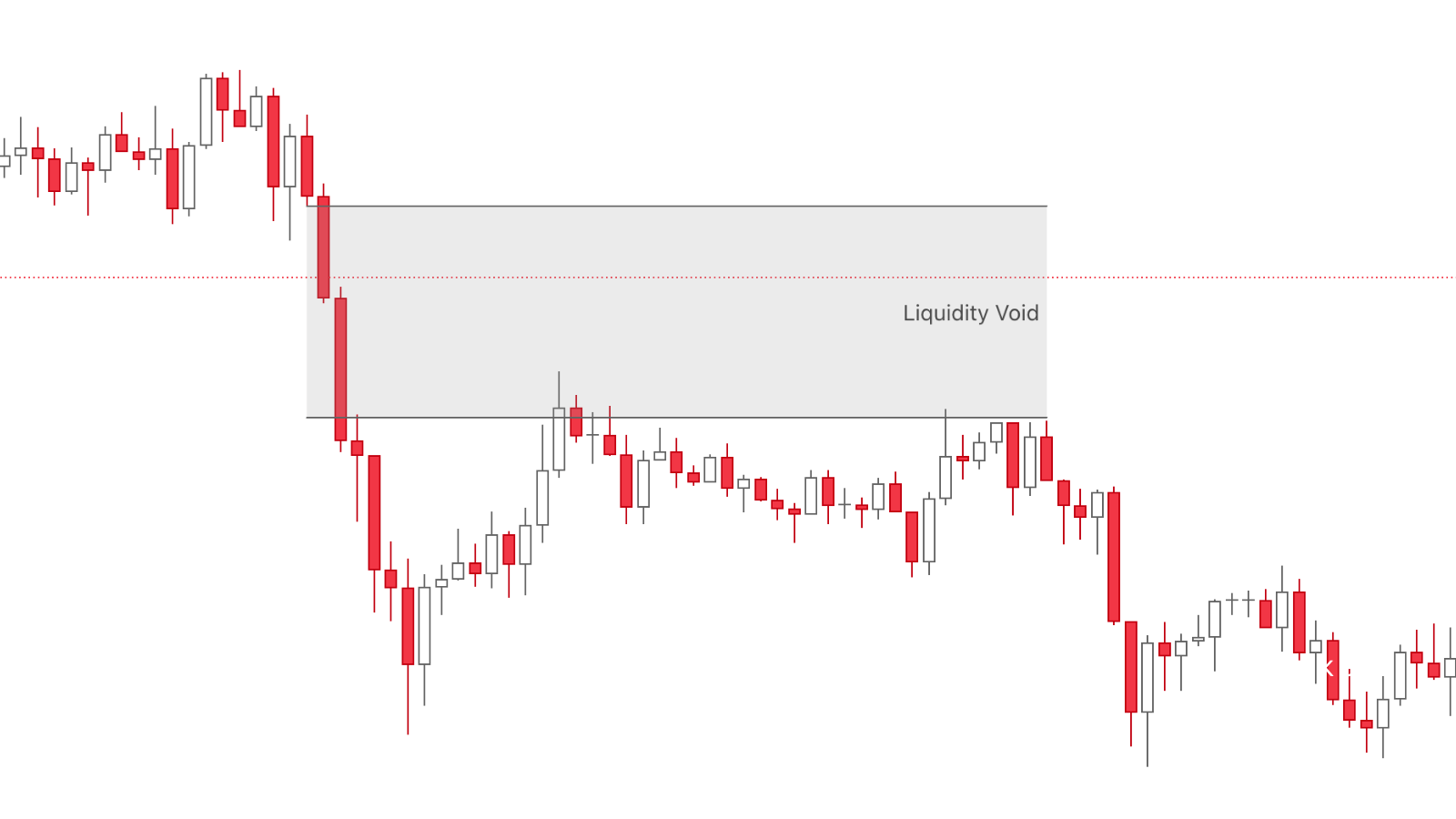 What is a Liquidity Void?
Characteristics of a Liquidity Void
- Very few trades are executed in that zone.
- Price may return to fill the entire LV, or only 50%.
- Price does not necessarily have to return to fill the LV immediately; it may take a few hours or a few days.
Comparing the Fair Value Gap and the Liquidity Void
- An LV can be formed from more than three candles and contains many consecutive FVGs.
- When we bring an FVG down to a lower timeframe, we usually see an LV.
What is an Inverse Fair Value Gap – iFVG?
An Inverse Fair Value Gap (iFVG) is a failed FVG, when price breaks through the FVG zone instead of holding within that zone.
This phenomenon marks a change in the initial momentum in the price trend.
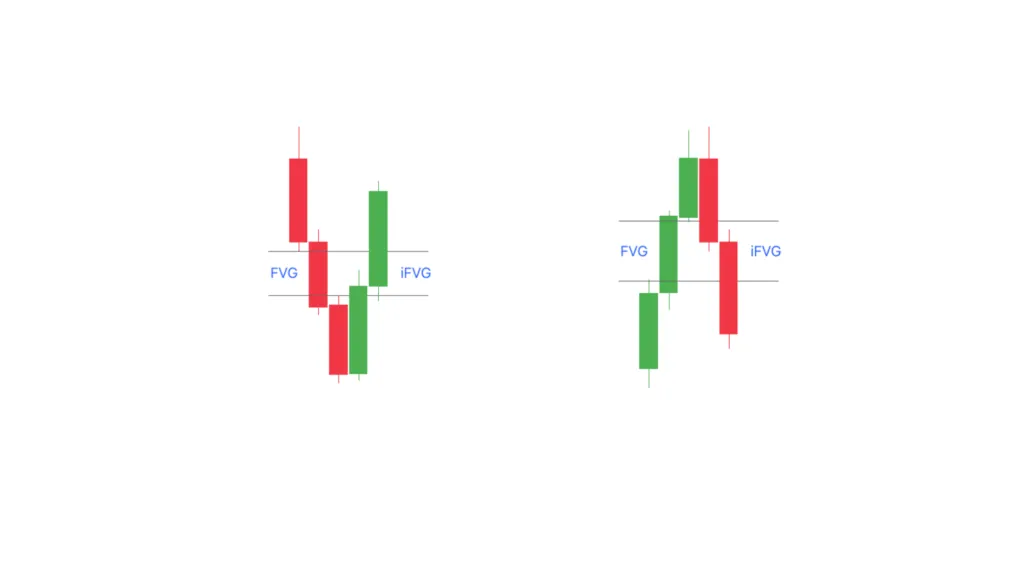 What is an iFVG?
When price moves in a certain direction, it usually respects FVG zones and continues in that trend.
However, if the FVG zone is penetrated, this zone will convert into an iFVG, leading price to reverse or correct temporarily.
After FVG → iFVG, this zone becomes a price support zone. The original supply zone becomes a demand zone and vice versa.
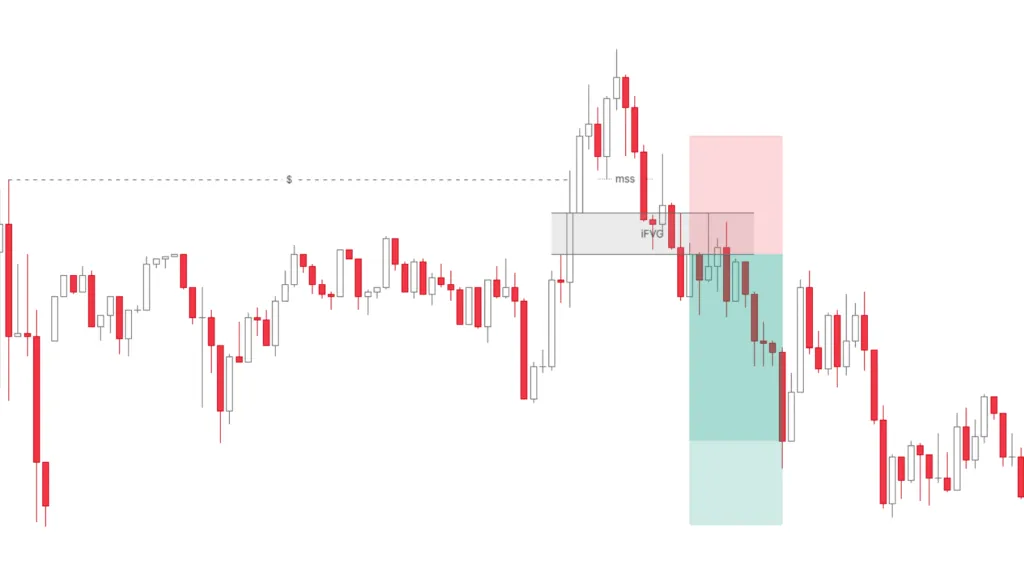 Entering a trade at an iFVG
In the example above, after price took liquidity at the old high, price reversed (MSS) and moved through the previous bullish FVG.
Implied Fair Value Gap – IFVG
The Implied Fair Value Gap (IFVG) is a hidden FVG zone, where no clear gap is visible because the wicks of the first and third candles intersect.
Because a hidden FVG also originates from a candle that moves strongly (displacement), when brought down to the LTF there is an FVG or a Liquidity Void, so in the future price can still return to tap into this zone.
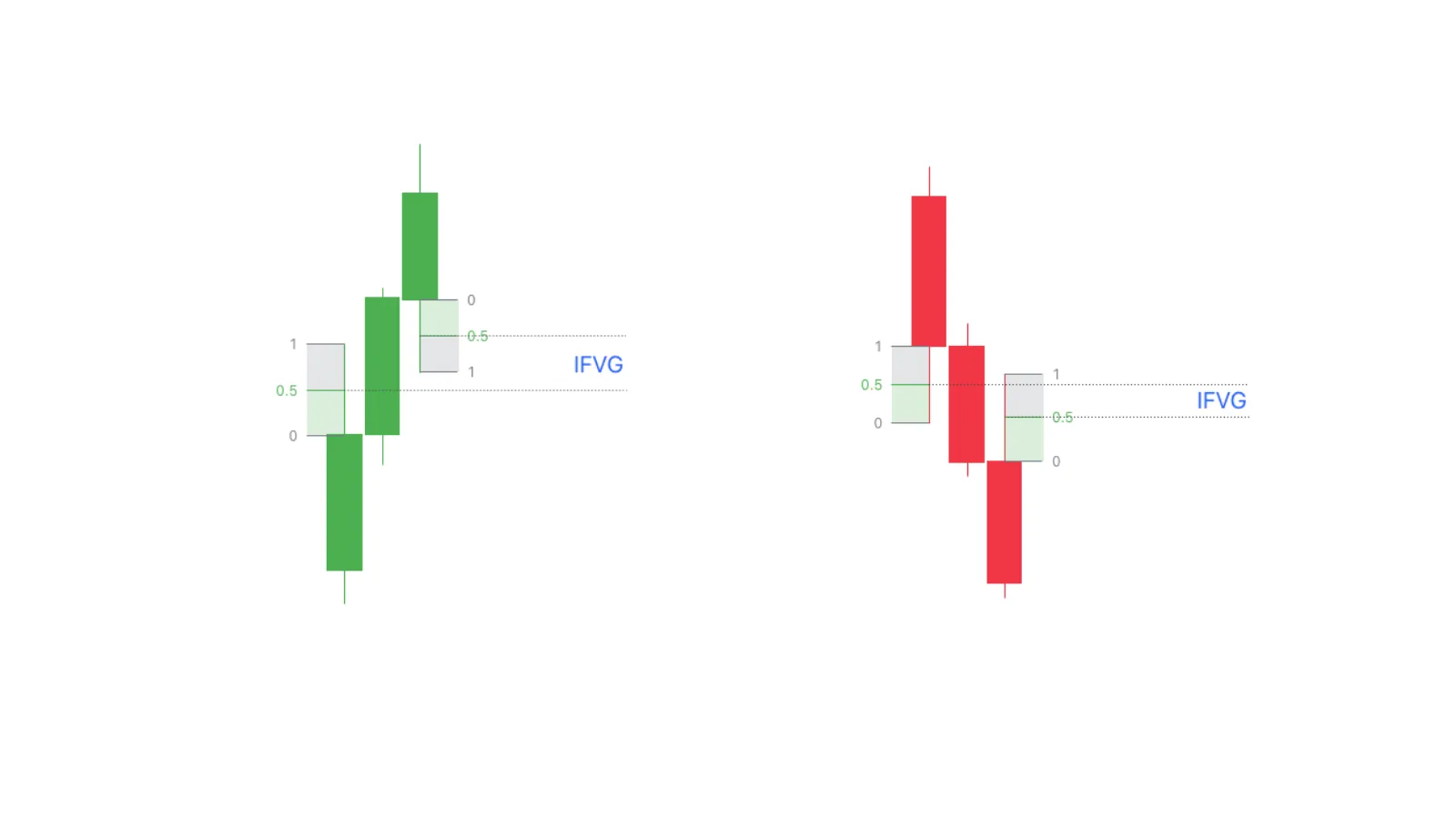 What is a hidden FVG?
How to identify an Implied Fair Value Gap:
- Find a large-bodied candle (bullish or bearish).
- The wicks of the candle before and after it must overlap the main candle body.
- No gap appears between the three candles.
To find an entry with an IFVG, we can use Fibonacci to find the PD Array for both wicks. The 50% intersection is the Implied FVG.
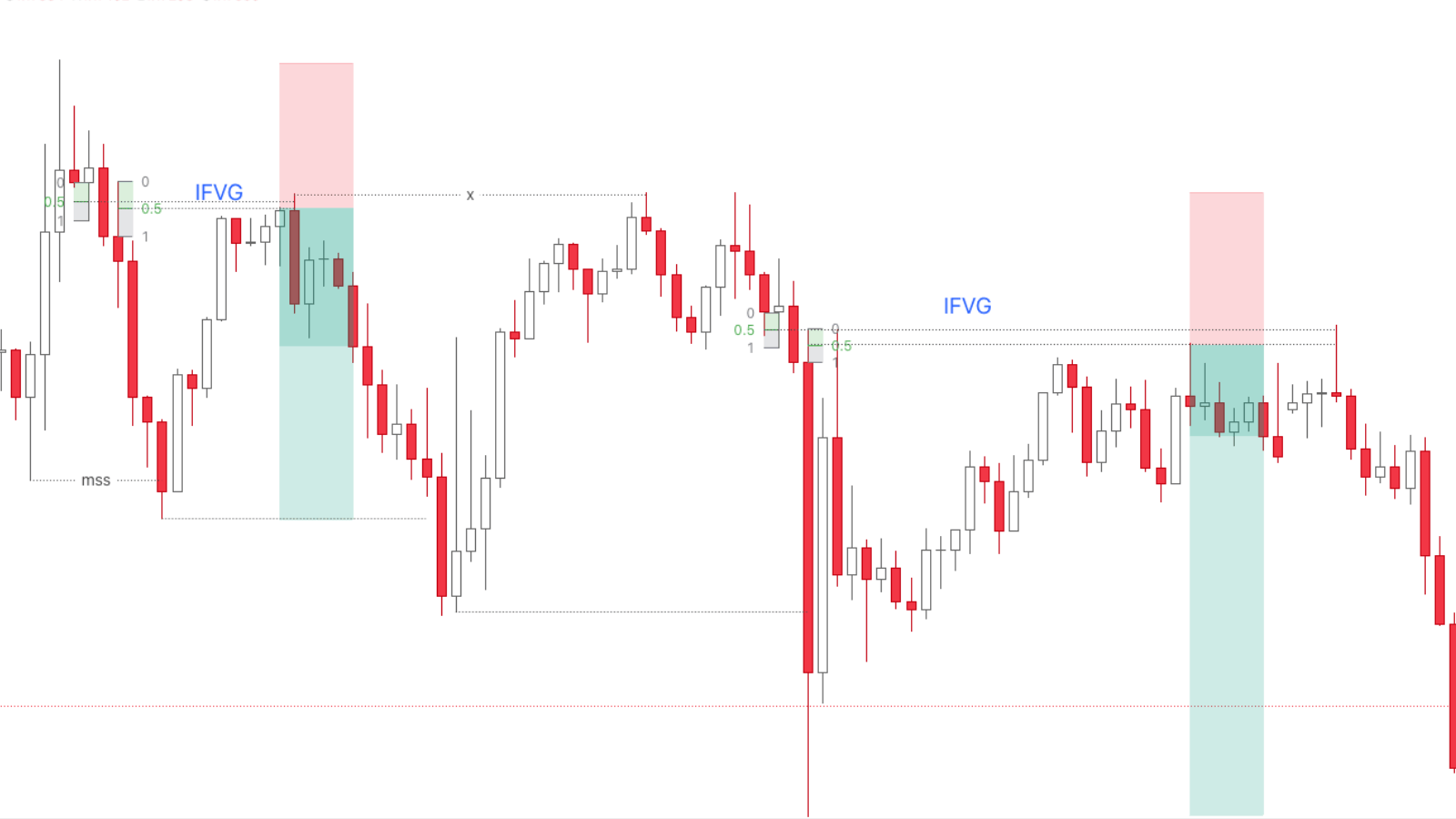 Finding an entry with a hidden FVG
What is a Balanced Price Range – BPR?
A Balanced Price Range (BPR) is a price zone on the chart where two opposing Fair Value Gaps intersect.
The two opposing FVGs represent the two sides of supply and demand; the intersecting zone is an important signal for recognizing a temporary balance between supply and demand in the market.
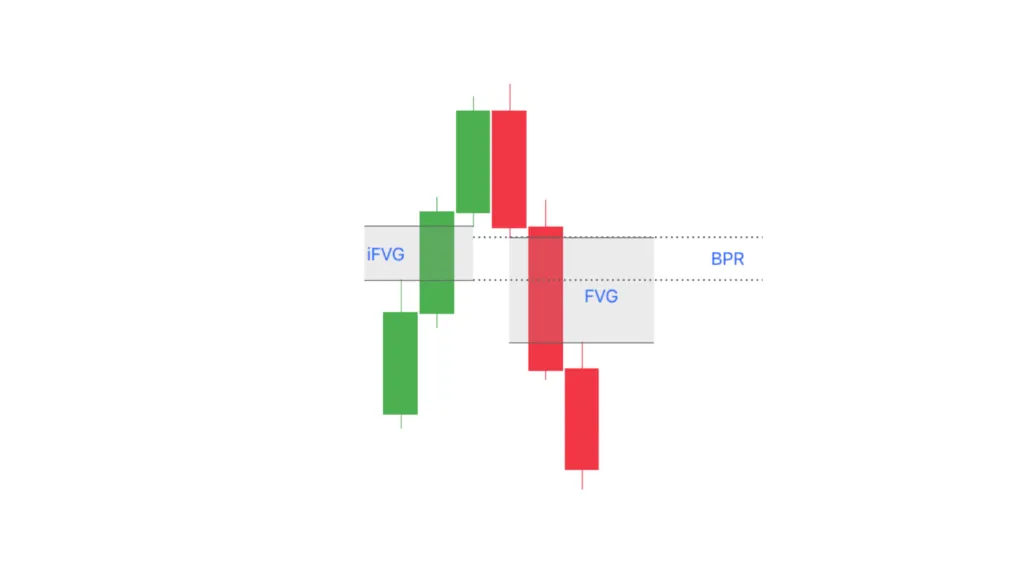 What is a BPR?
How to identify a BPR:
BPR = The intersecting zone between an iFVG and an FVG.
To recognize a BPR, you need to carry out the following steps:
- Identify a sell-side FVG.
- At the same time, mark a buy-side FVG.
When these two FVGs lie horizontally opposite each other and have an overlapping price section, that overlapping zone is the Balanced Price Range.
A BPR is a price zone that the market can return to tap into before continuing the uptrend due to its fair nature.
In terms of potential reaction, a BPR has a higher probability of winning than an FVG.
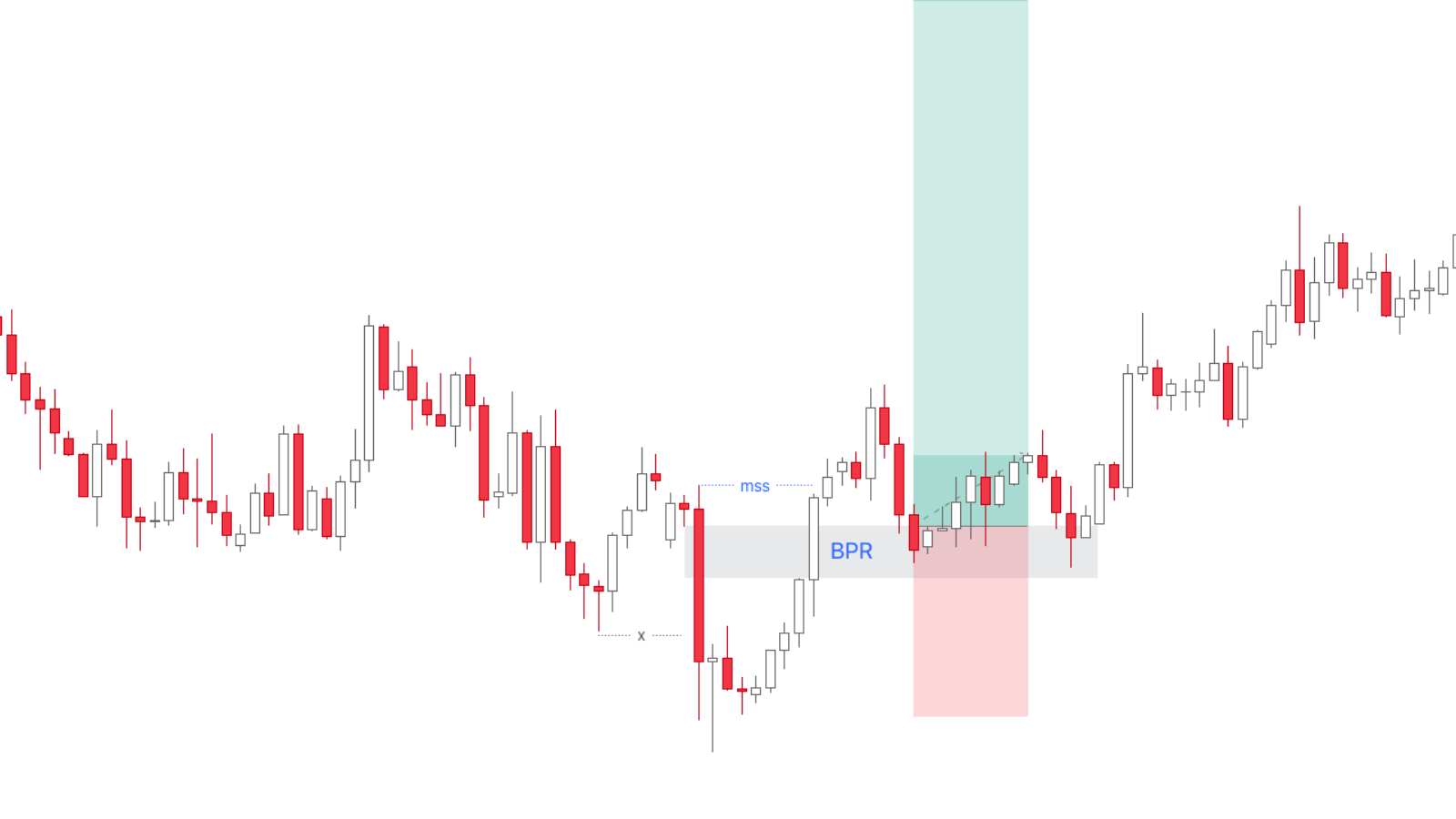 A BPR is a highly reliable entry zone
All of the price zones FVG, iFVG, IFVG, LV, BPR learned in this article are formed from strong bullish or bearish candles (in Wyckoff called an Sbar).
Therefore, in practice we only need to observe the strong impulsive candles forming to be able to make a decision to look for an entry, instead of memorizing mechanically.
5/5 - (12 votes)
Read structure 10x faster with JUKA
JUKA maps SMC structure — swings, BOS, CHoCH and inducement zones — automatically on any TradingView chart. No more hand-drawing structure for hours.
Get JUKA — $150